
Verified Customer
Pleased with our greenhouse,well informed with the delivery ,and a lovely delivery man.would highly reccomend this company
Written by Matt W, Greenhouse Stores
Choose your greenhouse size first, and go one size bigger than you initially think you need. Then choose the shape, frame and glazing to suit your garden and growing plans. Prepare a firm, level base before installation. This greenhouse buyers guide covers sizes, glazing, frames, bases and installation. It has practical starting points for small gardens and larger growing spaces.
At Greenhouse Stores, we have been trading since 2012. We recommend starting with your available space and what you want to grow. A greenhouse should have room for your plants, your equipment and you.

Find a greenhouse that suits you
Answer ten quick questions in about two minutes. Our free finder shows your matches and the reasons for each.
On this page
Choose your greenhouse around your crops and whether you plan to grow seasonally or throughout the year.
For spring-to-autumn growing, start with the space needed for tomatoes, peppers, cucumbers and seedlings. Think about which plants will share the greenhouse at the same time. Seedlings need staging, while your other crops need their own growing space.
Write down what you want to grow before looking at individual models. Separate your regular crops from plants you would like to try. Use this list to work out floor space and staging requirements.
Year-round growing needs a different plan. You may want to overwinter tender plants, grow winter salads or heat the greenhouse. Better insulated glazing deserves closer attention for these uses. Twin-wall polycarbonate keeps in more warmth than glass.
If you plan to use a heater, allow for a power supply when choosing the position. Read our guide to how to heat a greenhouse before settling on your arrangement.
Choose one size bigger than your first thought, because staging, pots and a path take up room quickly.
A 6ft-wide greenhouse is the practical minimum for a central path. An 8ft-wide greenhouse fits staging down both sides. Extra length gives you more floor space, but your layout still needs a usable path.
When planning a fit, we recommend marking out the greenhouse footprint before committing to a size. Mark the path and staging positions within it. Then check how much growing space remains. Picture yourself reaching plants and carrying pots through the door.
The table below compares standard greenhouse sizes and their approximate floor areas.
| Size (feet) | Approx. size (metres) | Floor area | Good for |
|---|---|---|---|
| 6x4 | 1.8 x 1.2 m | about 2.2 m² | Small gardens and seasonal growing |
| 6x6 | 1.8 x 1.8 m | about 3.3 m² | Beginners and mixed crops |
| 6x8 | 1.8 x 2.4 m | about 4.5 m² | Seedlings alongside summer crops |
| 8x8 | 2.4 x 2.4 m | about 5.9 m² | Staging down both sides |
| 8x10 | 2.4 x 3.0 m | about 7.4 m² | More growing space and staging |
| 10x12 | 3.0 x 3.7 m | about 11.1 m² | Larger growing plans |
Exact model sizes vary slightly, so use the dimensions on each product page when preparing your base.
For compact spaces, compare our 6x4 greenhouses and 6x6 greenhouses. Our 8x6 greenhouses provide another size to consider.
Compare 8x10 greenhouses if you need more room. You can also browse our small greenhouses or large greenhouses by available space.
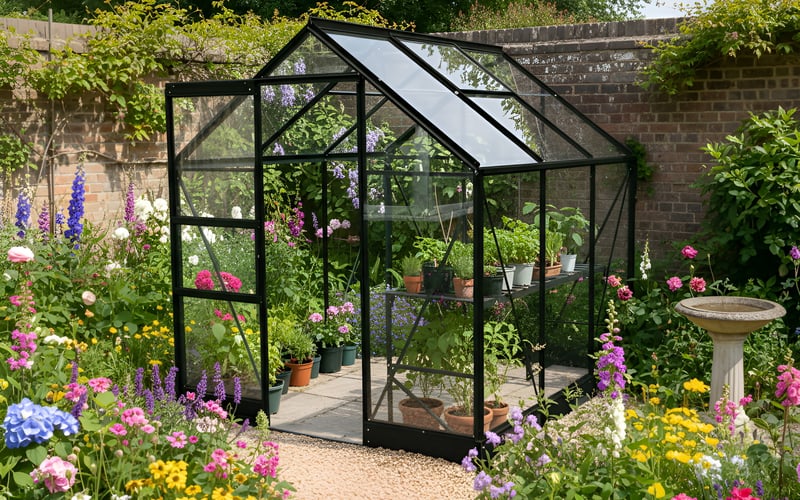
Shop the Vitavia Apollo 6x6 Black Greenhouse £735
The Apollo suits beginners who want a 6x6 aluminium greenhouse with toughened glass. Its frame is black.
Choose a shape that fits your available ground and how you want to use the greenhouse.
A lean-to needs a suitable place against a wall or fence. A freestanding model needs its own footprint. For a sitting area, include that space in your layout before allocating room to plants.
These lean-to models suit different amounts of available space. Use their dimensions to assess the wall and base you intend to use.
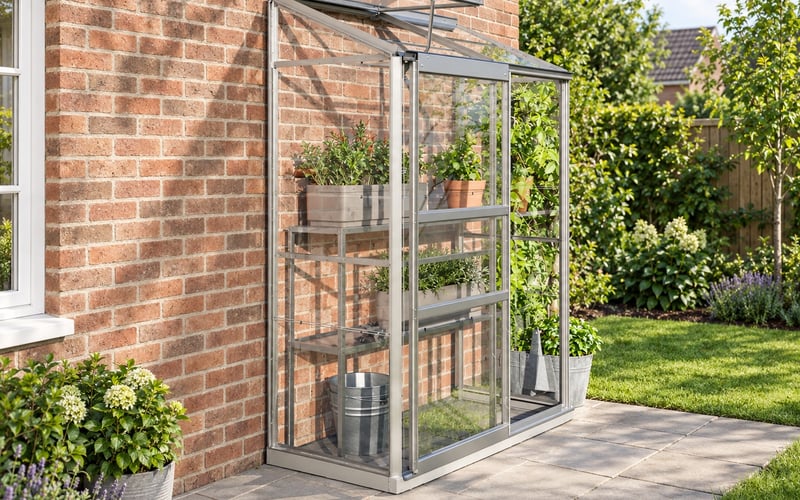
Shop the Vitavia Ida 900 Lean-To Greenhouse £326
The Ida 900 suits very small spaces. This 2x4 ft lean-to has toughened glass.
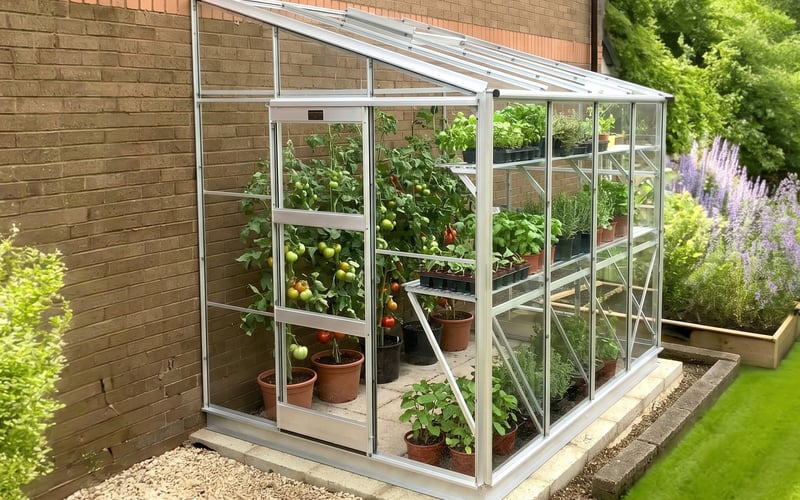
Shop the Elite Kensington 6x12 Lean-To Greenhouse £1,899
The Kensington suits a longer lean-to layout. This 6x12 aluminium model has 3mm toughened glass.
Choose the frame for appearance and upkeep, then choose glazing for clarity, warmth and safety.
Aluminium greenhouses are light and need very little upkeep. Their slim bars let in plenty of light. Many models have powder-coated colour options, including green and black.
Browse our black greenhouses if that finish suits your garden. Available finishes depend on the individual model.
Wooden greenhouses have a warmer look and hold a little more warmth. Wood needs occasional treatment. Our Swallow wooden range uses thermo wood, which is thermally modified timber.
Horticultural glass is the most affordable glazing choice. It is clear, but it breaks into sharp pieces.
Toughened safety glass is stronger and breaks into small, blunt pieces. It is the best choice around children and pets. It also suits buyers who want clear glazing.
Polycarbonate glazing is light and very hard to break. Twin-wall sheets keep in more warmth, but the view through them is less clear.
| Glazing | Light | Warmth | Safety | Suits |
|---|---|---|---|---|
| Horticultural glass | Clear glazing | Less insulated than twin-wall sheets | Sharp pieces if broken | Buyers prioritising affordability |
| Toughened safety glass | Clear glazing | Less insulated than twin-wall sheets | Small blunt pieces if broken | Gardens with children and pets |
| Twin-wall polycarbonate | Less clear view through sheets | Keeps in more warmth | Very hard to break | Buyers prioritising insulation |
For seasonal growing, compare clarity and safety alongside your budget. For year-round plans, give insulation more attention.

Shop the Swallow Kingfisher 6x10 Wooden Greenhouse £3,397
The Kingfisher suits buyers who prefer a thermo wood frame. This 6x10 model includes installation.
Start with ventilation, then plan doors, staging, shading, water collection and a thermometer.
Roof vents plus a side louvre should lead your equipment checks. Aim for a vent area of roughly a fifth of the floor area.
Automatic vent openers open and close with temperature. They need no power.
Sliding doors save space, while hinged doors seal well. Wide doors help when you need to move a wheelbarrow through the entrance. Check the door arrangement against your intended path.
Check how many roof vents each model includes before comparing prices. Check whether a side louvre is included or needs adding. Compare the total opening area with the greenhouse floor area.
Plan staging and shelving around your seedlings and pots. Include them in the floor plan before deciding how much growing room remains. Keep the central path clear.
Add shading for summer and a thermometer to check the temperature. Include guttering and a water butt in your water arrangements. Mark their positions while you can still adjust the layout.
Choose the sunniest open position and prepare a firm, level, square base.
Ideally, place the ridge east to west so the long side faces south. Keep the greenhouse away from overhanging trees. Choose somewhere sheltered from strong wind, with water and power nearby if possible.
Year-round heating needs access to a power supply. Water access also belongs in the position decision.
Our guide to the best position for a greenhouse explains the siting considerations.
Base options include paving slabs on a compacted sub-base, concrete, or a timber or steel base frame. The finished base must be firm, level and square.
When fitting a greenhouse, we recommend checking the base both ways with a level before building. Measure the diagonals and check that they match.
Use the model's exact dimensions for the base, rather than its rounded size name.
Read our guide to preparing the ground for a greenhouse base before starting work.
Most garden greenhouses do not need planning permission under permitted development, but limits apply. Within 2m of a boundary, the maximum height is 2.5m. Elsewhere, the limit is 4m for a dual-pitched roof or 3m for other roofs.
The greenhouse must not be in front of the house. Together with other outbuildings, it must not cover more than half the garden. Listed buildings, flats and some protected areas have different rules.
Check the Planning Portal guidance on outbuildings against your property and proposed position before proceeding.
You can build it yourself with help, or choose professional installation for your greenhouse.
Many people build their own with two people and a free weekend or two. Larger models and glass models take longer.
Read the model's assembly information before choosing the DIY route. Plan the work with the person who will help you.
We offer professional installation across England, Scotland and Wales. Swallow wooden greenhouse prices include installation as standard. For Vitavia and Elite aluminium models, installation can be added at checkout. Janssens greenhouses can also be installed.
Installation prices start from £325 for a 6x4. Our greenhouse installation service page has the service information.
For a fair budget comparison, include the base and the equipment you plan to add. Then include installation where it is separate.
A mini greenhouse, cold frame or polytunnel may suit your space or budget better.
A mini greenhouse is a practical starting point for a patio or balcony. Choose it around the plants you want to accommodate.
Cold frames suit hardening off seedlings. Start with that use if preparing seedlings is your main aim.
Polytunnels provide lots of growing space for the money.
For beginners, a 6x6 or 6x8 aluminium greenhouse is a sensible first buy. Choose toughened glass or polycarbonate according to your safety and insulation priorities.
The best greenhouse for the money depends on the space and equipment you need. Include the base and installation in your budget, alongside glazing and ventilation.
Autumn or winter is the best time to buy a greenhouse. This gives you time to prepare the base and have the greenhouse ready before spring sowing.
These models are useful starting points for different gardens and growing plans.
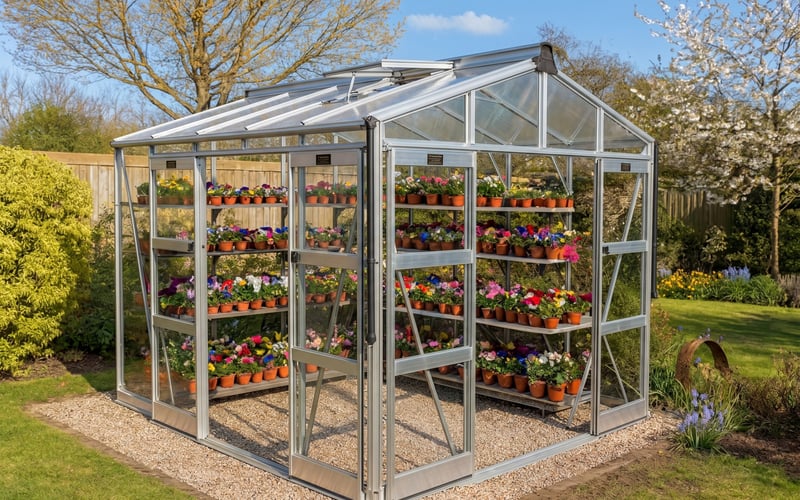
Shop the Elite Sanctuary 8x8 Greenhouse £2,569
The aluminium Sanctuary 8x8 suits buyers who want room to grow and sit.
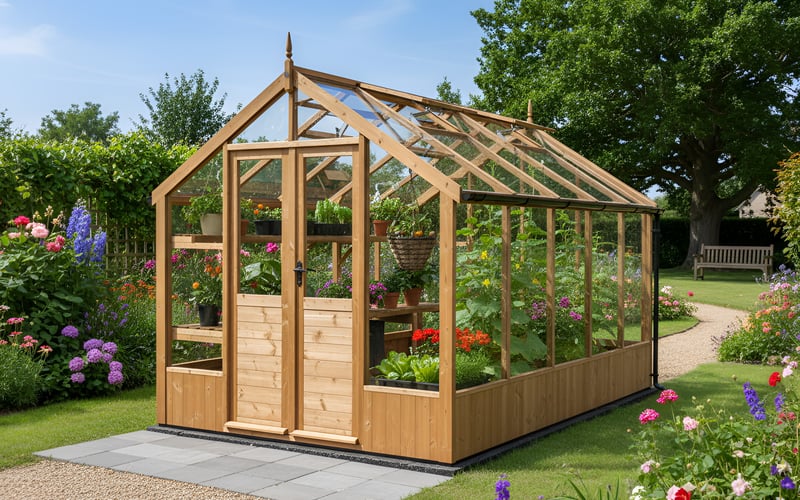
Shop the Swallow Raven 8x10 Wooden Greenhouse £4,357
The thermo wood Raven 8x10 suits buyers who want an 8ft-wide wooden greenhouse. Installation is included.
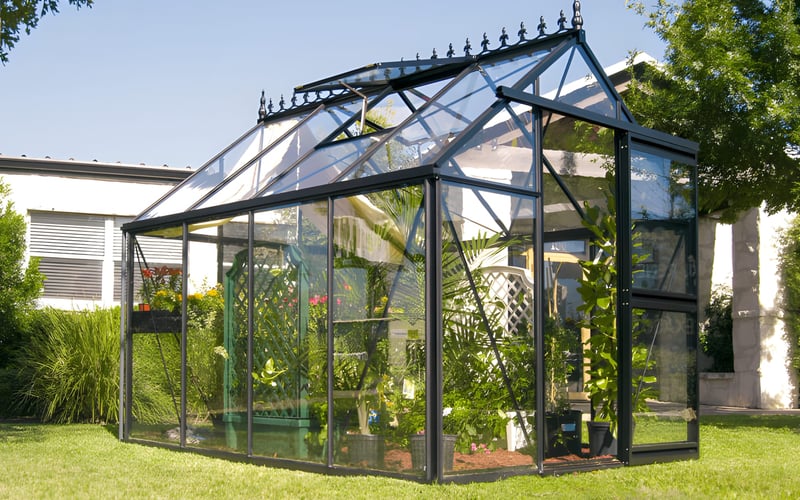
Shop the 8x10 Janssens Eos Junior Greenhouse in Black £3,270
The Belgian-made Eos Junior 8x10 suits buyers who want a stylish garden feature. Its frame is black aluminium.
Browse all greenhouses, or compare Vitavia, Elite, Swallow and Janssens on our brand pages.
Your growing plans and available space should guide the final choice.
A 6x6 or 6x8 aluminium greenhouse is a sensible beginner choice. Choose toughened glass or polycarbonate to suit your priorities. Allow for staging, pots and a path before settling on the size.
Standard greenhouse sizes include 6x4, 6x6, 6x8, 8x8, 8x10 and 10x12 feet. Exact dimensions vary slightly between models. A 6ft width is the practical minimum for a central path. An 8ft width fits staging down both sides.
Glass is clearer, while twin-wall polycarbonate keeps in more warmth. Polycarbonate is very hard to break. Toughened safety glass is the best choice around children and pets. Horticultural glass is the most affordable choice, but it breaks into sharp pieces.
Autumn or winter is the best time to buy a greenhouse. This gives you time to prepare the base before spring sowing. Plan installation alongside the base preparation so the greenhouse is ready for use.
Most garden greenhouses do not need planning permission under permitted development, but limits apply. Height, position and garden coverage affect what is permitted. Listed buildings, flats and some protected areas have different rules.
Yes, a greenhouse needs a firm, level, square base. Options include paving slabs on a compacted sub-base, concrete, or a timber or steel base frame. Check the level both ways and make sure the diagonals match before building.
Tell us your available space and what you want to grow. We can help you compare suitable models and installation options.
Contact our team or call 0800 098 8877.
Need a size we do not list? See our bespoke greenhouse options.