How to Grow Peony Flowers: UK Planting and Care Guide
Peonies are hardy garden plants grown for their generous spring and early-summer flowers. Give them a suitable spot outdoors, well-drained soil and time to settle. Planting depth depends on the type: herbaceous peonies need shallow planting, while grafted tree peonies need their graft buried. A greenhouse is not needed for an ordinary garden peony. Here is how to get started and avoid the common mistakes.
Key Takeaways
- Autumn is a good time to plant bare-root peonies. Plant potted ones when the ground is workable, avoiding frozen or waterlogged soil.
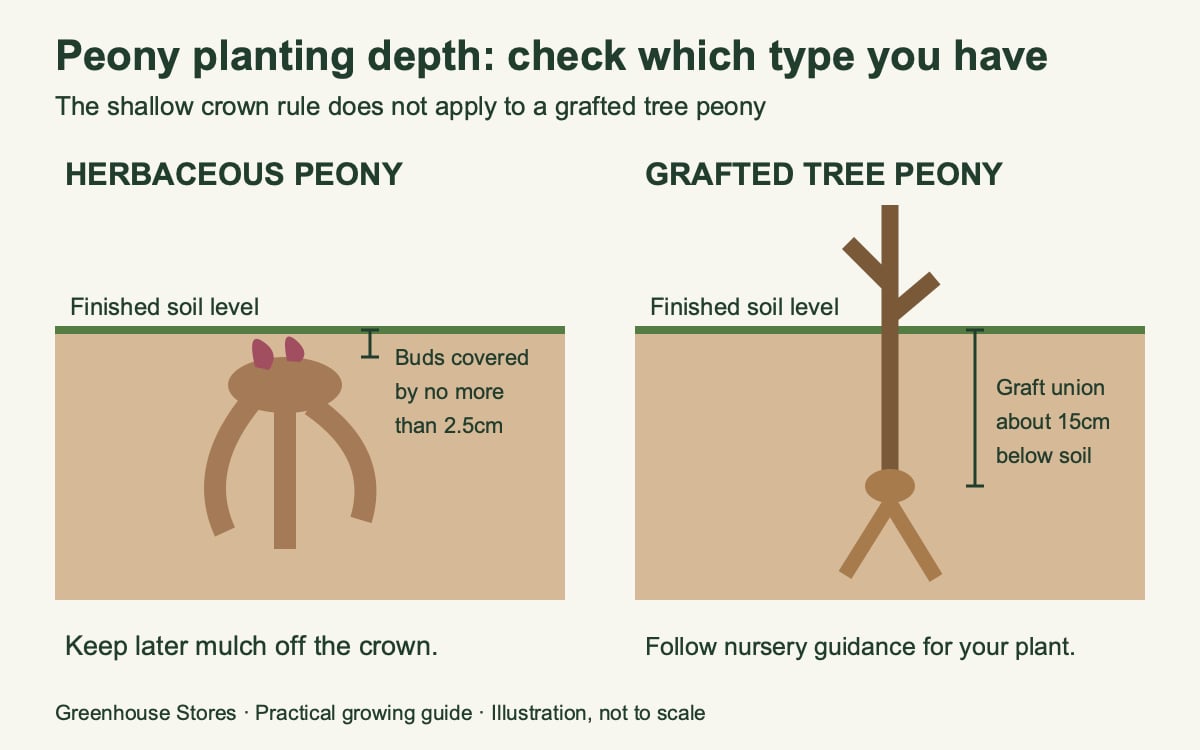
- Check the type before planting. Herbaceous crowns go shallow; grafted tree peonies need different treatment.
- Choose well-drained soil and a position suited to your peony. Most herbaceous varieties flower best in sun.
- Peonies can be moved in autumn if needed. Give them time to settle and flower again.
- Put supports around heavy-flowered varieties before stems flop. It is easier than trying to prop up wet blooms.
- For cutting, choose buds showing colour that feel slightly soft. Leave plenty of foliage on the plant.

Expert Tip
Do not buy a greenhouse just for peonies. Ordinary garden varieties belong outdoors. If a plant is not flowering, check its planting depth, light and age before buying extra equipment.
When should you plant peonies in the UK?
Autumn is a good time to plant bare-root peonies, while they are dormant and the soil is workable. Follow the nursery's timing for the plant supplied. Postpone planting if the ground is frozen or waterlogged rather than forcing it into poor conditions.
A potted peony can be planted when conditions are suitable. Water it in well and check it during dry weather while it establishes. There is no need to keep a healthy potted plant waiting until autumn. Our soil guide can help you assess the planting site.

What soil do peonies need?
Choose fertile soil that drains well. Peonies will not thank you for a crown sitting in winter water. If the site stays wet, choose a better-drained position or improve the wider bed. A bucket of grit in one planting hole is not a dependable drainage fix.
Work suitable organic matter into the surrounding bed where the soil needs improvement. Avoid automatically adding lime or fertiliser without a reason. Keep later mulches clear of a herbaceous crown so it is not gradually buried.
How deep should you plant a peony?
For a bare-root herbaceous peony, keep the upper buds close to the surface, with no more than about 2.5cm of soil above them. Planting deeply can reduce flowering. For intersectional peonies, follow the nursery's planting directions.
Make the hole wide enough to spread the roots without forcing them. Backfill, firm gently and water in. Grafted tree peonies are different: place the graft union about 15cm below soil level. Do not apply the shallow herbaceous rule to a grafted tree peony.
What are the three types of peony?
Peonies divide into three groups: herbaceous, tree, and intersectional (Itoh). Each behaves differently in the garden and has different pruning and care requirements.
| Type | What happens in winter? | Main care difference |
|---|---|---|
| Herbaceous | Top growth dies back | Keep the crown shallow; remove dead foliage in autumn |
| Tree | A woody framework remains | Keep healthy woody stems; check graft depth when planting |
| Intersectional (Itoh) | Mostly dies back like a herbaceous peony | Follow the nursery's planting and pruning guidance |
Herbaceous peonies include familiar varieties such as Sarah Bernhardt and Duchesse de Nemours. Tree peonies are woody shrubs, despite the name. Intersectional peonies come from crosses between the two groups. Choose for the space and flower you like, then check the label before planting or cutting back.
How do you care for peonies through the year?
Once established, peonies need a fairly simple seasonal routine. Check supports, watering and the right time to tidy each type.
| Month | Task | Detail |
|---|---|---|
| Spring | Check new growth | Use a general fertiliser if needed, following the label |
| Before stems flop | Support | Fit rings or other supports around heavy-flowered varieties |
| After flowering | Deadhead | Remove spent flowers, but leave healthy leaves |
| Dry weather | Water | Check newly planted and container-grown peonies; do not follow a rigid weekly schedule |
| Autumn | Tidy | Remove dead herbaceous foliage; retain healthy tree-peony stems |
| When mulching | Keep crowns clear | Spread organic matter around, not over, herbaceous crowns |
Leave healthy green foliage after flowering. It is still feeding the plant. Once herbaceous stems have died back, remove them and clear fallen debris. Tree peonies keep their woody framework; do not cut those down as though they were herbaceous.
Expert Tip: The Ant Question
Ants on peony buds are usually visiting the sweet secretions. They do not need spraying, and peonies do not need ants to open their flowers. If you are cutting stems for a vase, check for insects before bringing them indoors.

Why is my peony not flowering?
The five most common reasons a peony fails to flower are: planted too deep, not enough sun, too young, recently moved, or over-fed with nitrogen. Work through this checklist before assuming the plant is faulty.
- Planting depth: check whether an herbaceous crown has been buried by soil or mulch. Correct it during dormancy if needed.
- Shade: look for trees or shrubs that now overshadow the plant. Moving a badly shaded peony in autumn may help.
- A young plant: small bare-root plants and divisions may need a few seasons to establish before flowering well.
- A recent move: give the plant time to recover. Peonies can be transplanted; poor flowering immediately afterwards does not mean the move failed.
- Feeding: avoid repeated high-nitrogen feeding in the hope of forcing flowers. Check the other causes first.
How do you deal with peony pests and diseases?
Peony wilt can cause shoots to collapse, buds to fail and grey mould to appear in damp weather. Remove affected material promptly and put it in household waste rather than home compost. Clear infected debris around the plant. No chemical controls are available to gardeners; copper fungicide is not the answer.
Spots on leaves have several possible causes, so identify the problem before treating it. Inspect new shoots for slugs and snails, and buds for aphids. Small aphid colonies can often be removed by hand or with a gentle water jet. Our slug guide and greenfly guide explain practical options. Do not use homemade pesticide mixtures.
How do you divide and propagate peonies?
An established herbaceous peony can be divided in autumn during dormancy. Lift carefully and split the crown with a clean, sharp tool. Keep several healthy buds and a good section of roots on each division. Small pieces usually take longer to flower.
Replant divisions promptly at the correct shallow depth and water them in. Healthy established plants do not need dividing routinely. Do not use this method on woody tree peonies; ask a specialist nursery about propagating those.

How do you cut peonies for a vase?
Choose buds showing colour that feel slightly soft rather than hard and tightly closed. Cut with clean secateurs and leave plenty of foliage behind. A newly planted peony is best allowed to build up before you take many stems for the house.
Put cut stems in clean water, remove leaves that would sit below the waterline and keep the vase out of direct heat. Change the water regularly. Opening speed and vase life vary with the variety and how far the buds have developed.
Do you need a cold frame for peonies?

View 4x4 Access Aluminium Coldframe - Toughened Glass
Optional use: shelter for a small collection of potted plants, not a requirement for growing peonies.
If you already use a cold frame, it can shelter pots from excessive winter rain with suitable ventilation. Ordinary hardy peonies can be planted outdoors; they do not need an Access cold frame to survive. Do not treat an unheated cold frame as guaranteed frost protection.
Price: £427
Frequently asked questions
Can you grow peonies in pots?
Yes, although many peonies are easier to grow in the ground. Choose a suitable variety and a generous container with drainage holes. Follow nursery advice on compost and planting depth, and check watering more often than for established border plants.
How long do peonies take to flower from planting?
Small bare-root plants may need a few seasons before flowering well. Larger potted plants can flower sooner. Check planting depth and growing conditions if an established plant repeatedly fails to bloom.
Do peonies need staking?
Heavy double flowers often benefit from support. Fit a ring or other suitable support before the stems flop. Not every variety needs staking, so watch how yours behaves after rain.
When should you cut back peony foliage?
Remove herbaceous foliage after it dies back in autumn. Leave healthy green leaves after flowering. Keep the woody framework of tree peonies, removing dead or damaged growth as appropriate.
Are peonies deer resistant?
Deer often leave peonies alone, but no planting is guaranteed deer-proof. Protect vulnerable new growth if browsing is a problem in your garden.
What are the best peony varieties for UK gardens?
Sarah Bernhardt, Duchesse de Nemours and Bowl of Beauty are familiar herbaceous choices. Coral Charm is also a herbaceous hybrid, not an Itoh peony. Choose for flower form, colour and available space rather than expecting one variety to suit every garden.