The Ultimate Guide to Slug Control
Slug control starts with finding what is eating your plants. Look for fresh feeding damage and slime trails, then check after dark. Protect vulnerable seedlings, remove nearby hiding places and keep checking after wet weather. Traps and barriers can help in some situations, but none makes a garden slug-proof. If you need a treatment, choose one suitable for your crop and follow its instructions.
Key takeaways
- Check damaged plants after dark before choosing a treatment.
- Inspect seed trays, pot rims and the underside of containers.
- Water plants when they need it; morning watering can leave fewer wet surfaces overnight.
- Do not rely on coffee grounds, eggshells or a narrow strip of copper alone.
- Keep salt, vinegar and homemade chemical sprays away from plants and soil.
Expert Tip
Start with the tray or plant that keeps losing leaves. Check beneath it and nearby pots with a torch. A focused check is more useful than scattering treatments across the whole garden.
How do you recognise slug damage?
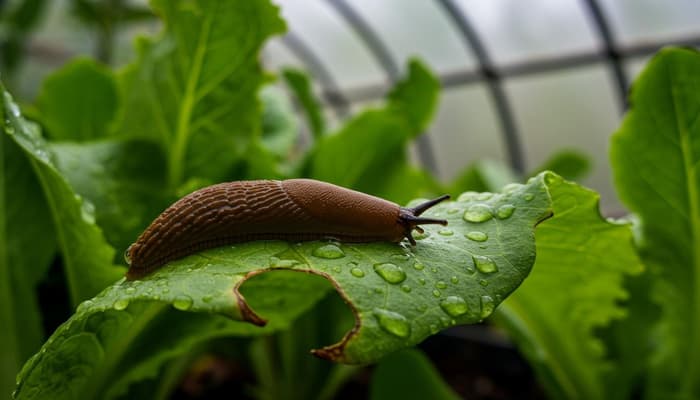
Slugs leave irregular holes in leaves and can eat young seedlings almost completely. A shiny slime trail is another clue. Check leaf undersides and the soil beside the damaged plant, especially after rain. Snails leave similar damage, so try to find the animal rather than diagnosing from a hole alone.
A torch check after dark often shows activity missed during the day. Wear gloves when handling slugs and wash your hands afterwards. Caterpillars and other pests can also eat leaves. If you find no slime or slugs, look again before buying a treatment.
Not every slug needs removing from the garden. Many feed on decaying material and provide food for wildlife. The aim is to protect the plants being damaged, particularly young vegetables and soft new growth. Our greenhouse pest guide can help you look at other possible causes.
What should you do first?
Move vulnerable seedlings to a spot where you can inspect them easily. Check beneath trays and pot rims before moving them. A clean bench is useful, but slugs can climb it. Leaves touching the ground or neighbouring plants can also provide a route across.
Remove discarded pots, boards and dead leaves immediately beside the affected plants. You do not need to clear every wildlife shelter from the garden. Concentrate on the growing area and keep habitat elsewhere. Check again after wet weather, rather than assuming one tidy-up has solved the problem.
Water the compost where roots need it. Morning watering can allow exposed surfaces to dry before night, but it is not a substitute for slug control. Do not leave a wilting plant dry just because it is evening. For seedlings under glass, see our seed-growing advice.
Which slug-control methods are worth trying?
Start with measures you can check and repeat. A method that protects one pot may be awkward across a vegetable bed. Keep looking for fresh damage so you know whether your chosen approach is helping.
| Method | Useful for | What to watch |
|---|---|---|
| Regular torch checks | Finding slugs around a small group of vulnerable plants | Hidden slugs and new arrivals mean checks need repeating. |
| Clearing nearby shelters | Making seed benches and pots easier to inspect | Keep wildlife habitat away from the plants you are protecting. |
| Covered beer traps | Catching some slugs close to a problem area | Empty regularly; keep pets away and avoid trapping other wildlife. |
| Copper barriers | An additional barrier around individual containers | Width, gaps and plant bridges affect results. Keep checking inside. |
| Slug-control nematodes | Suitable soil-grown crops under the product's stated conditions | Follow storage, temperature, moisture and application instructions. |
| Authorised slug pellets | Situations where other measures have not protected the crop | Use only a product authorised for your location and intended use. |
Beer traps
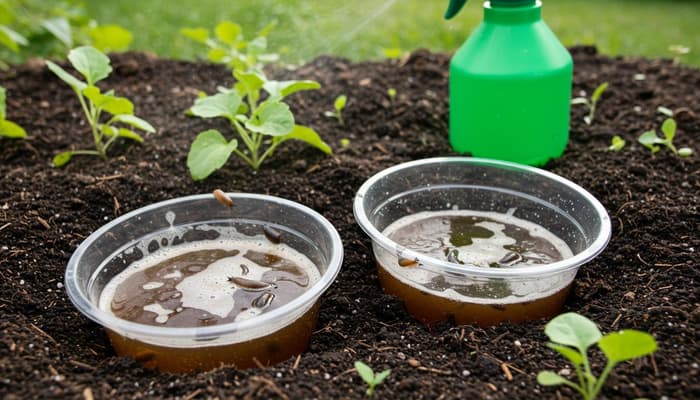
Beer traps catch some slugs, but they do not protect a whole garden. Position a covered trap near the damaged plants and inspect it regularly. Keep the entrance slightly above soil level to reduce accidental catches of ground-dwelling insects. Follow the instructions if using a purchased trap.
Keep traps away from pets and children. Remove catches promptly and refresh the bait when needed. A trap full of slugs shows activity nearby; it does not prove that your seedlings are safe. Check the plants themselves for new damage.
Copper, eggshells and other barriers
Copper may help around a container, but it is not a guaranteed shield. Narrow tape, gaps and leaves touching neighbouring plants can undermine it. Check the pot for slugs before fitting a barrier, then keep inspecting it.
Crushed eggshells, grit, bran and seaweed meal should not be presented as proven stand-alone protection. Material that looks uncomfortable to us may still be crossed by a slug. Avoid spending time building elaborate rings while fresh damage continues inside them.
Do coffee grounds stop slugs?
Do not rely on a ring of coffee grounds to protect seedlings. Research involving caffeine solutions does not show that ordinary used grounds give the same result. Coffee residues can also affect seed germination and plant growth when overused.
We would put modest amounts into mixed compost rather than use them as the main defence around tender plants. Avoid making concentrated coffee sprays or drenches from internet recipes. Read our guide to using coffee grounds in the garden for the composting advice.
Nematodes and pellets
Slug-control nematodes are living organisms, so storage and application matter. Check the product's use-by date, suitable soil-temperature range and watering requirements before ordering. They need the right conditions and do not deal with every slug or snail species equally.
If choosing pellets, check current authorisation and the label for your crop and location. Some products use ferric phosphate, but that does not make every formulation interchangeable or harmless. Follow the application rate and precautions, keep products in their original packaging, and prevent access by pets and children.
Metaldehyde pellets are no longer permitted for outdoor use. Do not use old supplies outside or assume an old online recommendation is still valid. The HSE guide to garden pesticides explains how to check an authorised product and use it correctly.
How do you protect greenhouse seedlings?
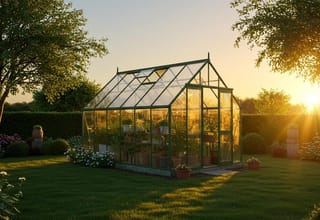
A greenhouse or cold frame gives you a more manageable place to raise young plants, but neither is slug-proof. Slugs can arrive in pots or hide around the base. Check trays before bringing them inside, clear debris under staging and inspect the growing area regularly.
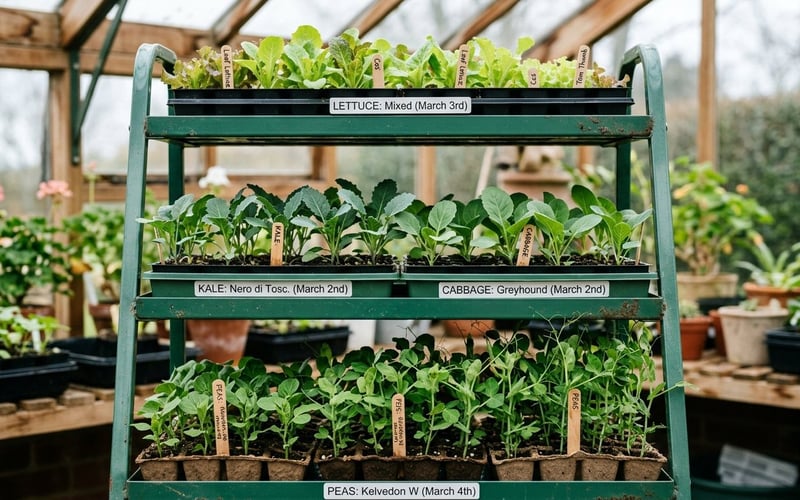
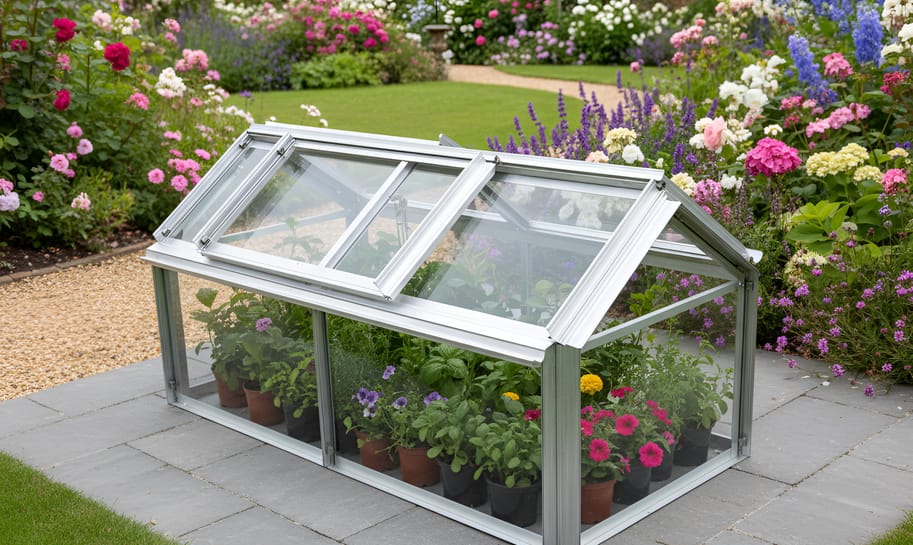
A cold frame can provide sheltered growing space while seedlings establish. Open it for ventilation as conditions require. It should not be kept shut simply to exclude slugs, particularly in warm sunshine.
Keep spare seedlings if you have room, especially for crops that have repeatedly been eaten. Planting out a stronger young plant can be more forgiving than sowing straight into a troublesome bed. It still needs checking after planting. Our spring greenhouse preparation guide covers getting the growing space ready.
What should you avoid?
Do not spread salt around plants or spray slugs with vinegar in the border. These can damage plants and soil. Boiling water also risks scalding and plant damage. Household cleaners, oils and homemade chemical mixtures do not belong on edible crops.
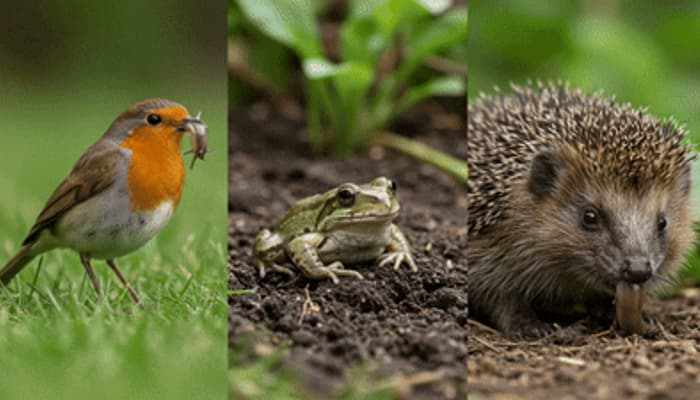
Encourage a varied garden with suitable habitat for ground beetles, birds and other wildlife. Predators can contribute to the garden's balance, but they will not reliably clear an infestation on demand. Keep checking vulnerable plants rather than waiting for wildlife to do the whole job.
Frequently asked questions
What is the best way to control slugs?
Start with regular checks and protection for the plants being damaged. Remove nearby hiding places, inspect after dark and repeat after wet weather. Add an appropriate treatment only where needed; no single method guarantees protection.
Do coffee grounds keep slugs away?
Do not rely on coffee grounds as a slug barrier. Studies of caffeine solutions are not proof that a ring of used grounds protects plants. Too much can also affect seedlings.
Does copper tape stop slugs?
Copper can help, but it does not guarantee protection. Width, gaps and leaves bridging the barrier affect results. Check for slugs already inside the protected area.
Should I use vinegar or salt on slugs?
No, avoid vinegar and salt around plants and soil. They can damage the growing area. Use practical prevention and, where needed, an authorised treatment used according to its label.
Are slug pellets safe around pets and edible crops?
Use only an authorised product and follow its specific precautions. Check that the intended crop and location are covered. Ferric phosphate is not a blanket guarantee of safety; prevent access by pets and children and keep the original packaging.