How to Grow Mushrooms in a Greenhouse
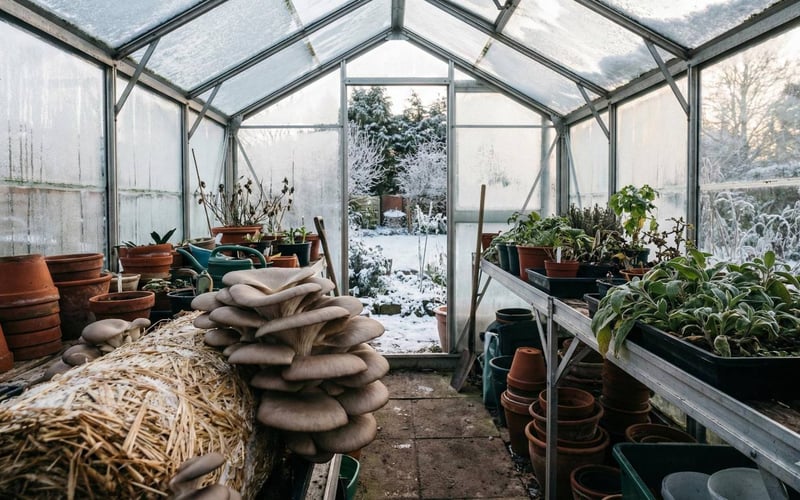
Growing mushrooms in a greenhouse can make good use of a sheltered, shaded corner. Start with a ready-to-fruit kit and check its temperature range before choosing a spot. An unheated greenhouse will not suit every kit through winter, and an indoor location may be easier. Follow the supplier’s instructions for watering, airflow and harvesting rather than treating all mushrooms alike.
Key Takeaways
- Choose the kit first. Its instructions decide the growing conditions, not the greenhouse calendar.
- Check overnight temperatures. Shelter from wind does not guarantee protection from frost.
- Provide shade and fresh air. Do not seal a growing block in a damp, unventilated box.
- Ask about suspect growth. Do not scrape mould off a block and assume the rest is safe.
- Allow some flexibility. Harvest timing and repeat crops vary with the kit and conditions.
Expert Tip
Try one kit before filling a shelf. Put a maximum–minimum thermometer beside it and check the supplier’s care sheet. If the spot is too cold overnight or too hot in afternoon sunshine, move the kit somewhere suitable rather than trying to make it tolerate the wrong conditions.
Is a greenhouse a good place to grow mushrooms?
Check your kit supplier's instructions for its temperature range, expected appearance and aftercare. Advice for a different kit may not suit yours.
Look for a spot out of direct sun, away from heaters and somewhere you can check daily. The space beneath staging may work if it has some indirect light, fresh air and a clean surface. Avoid a corner that collects muddy runoff from plant pots above.
Do not use condensation on the glass as your care guide. It tells you little about whether a particular block needs misting. Follow the instructions for the kit itself, and keep normal greenhouse ventilation working for your other plants.
Which mushrooms should a beginner choose?
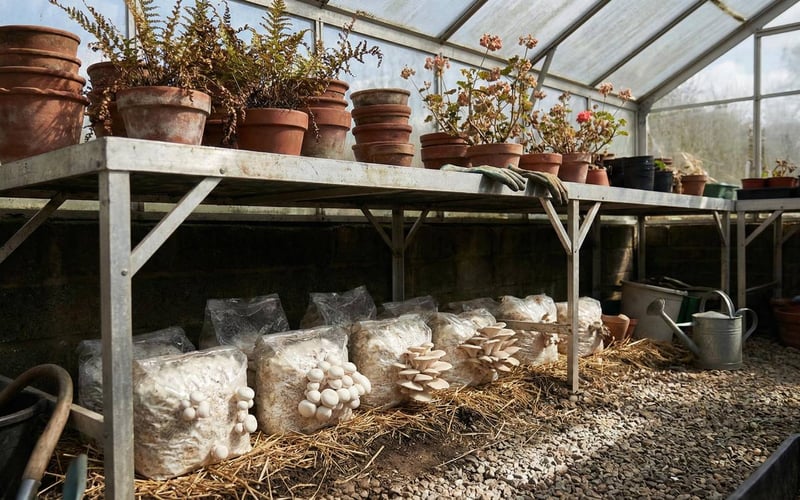
A ready-to-fruit oyster mushroom kit is a straightforward place to start. The growing material is already colonised, so you can concentrate on looking after it rather than preparing substrate and introducing spawn yourself. Buy from a supplier that identifies the mushroom and provides clear care instructions and support.
Check your kit supplier's instructions for its temperature range, expected appearance and aftercare. Advice for a different kit may not suit yours.
Shiitake, lion’s mane and button mushroom kits need their own approach. Some blocks need soaking, some need a casing layer and some arrive ready for a simple opening-and-misting routine. Read the instructions before buying, especially if the greenhouse is your only available space.
This guide is about labelled growing kits, not identifying wild mushrooms. Do not eat mushrooms that appear unexpectedly in greenhouse beds, pots or compost.
Do you need a potting shed for incubation?
No. A ready-to-fruit kit has already completed the stage in which the fungus spreads through its growing material. Keeping it in a dark shed for several more weeks may be unnecessary or contrary to its instructions.
If you buy spawn or an uncolonised kit instead, incubation becomes a separate job. Temperature, cleanliness, substrate preparation and the stage at which you open the bag all depend on the method. Use the supplier’s complete instructions. A generic “shed first, greenhouse afterwards” routine is not a reliable substitute.
How to grow mushrooms from a kit
1. Check the kit before opening it
Find the care sheet, identify the mushroom and check when the supplier recommends starting. Photograph anything that concerns you while the packaging is intact. White growth can be normal mycelium, but its appearance varies between mushrooms: colour alone is not enough to diagnose a problem.
2. Choose a suitable growing spot
Measure the temperature where the block will sit. Leave room to check it and keep it separate from dripping plant pots. If the kit comes with a humidity cover, use it as directed; do not improvise an airtight enclosure.
3. Open and water it as instructed
Follow the opening or cutting instructions for your exact kit. Mist or soak only as directed rather than keeping every block continuously wet. Water standing in a tray is not a replacement for the right moisture around the fruiting surface.
4. Watch its progress without promising a deadline
Check your kit supplier's instructions for its temperature range, expected appearance and aftercare. Advice for a different kit may not suit yours.
5. Harvest and rest the block as directed
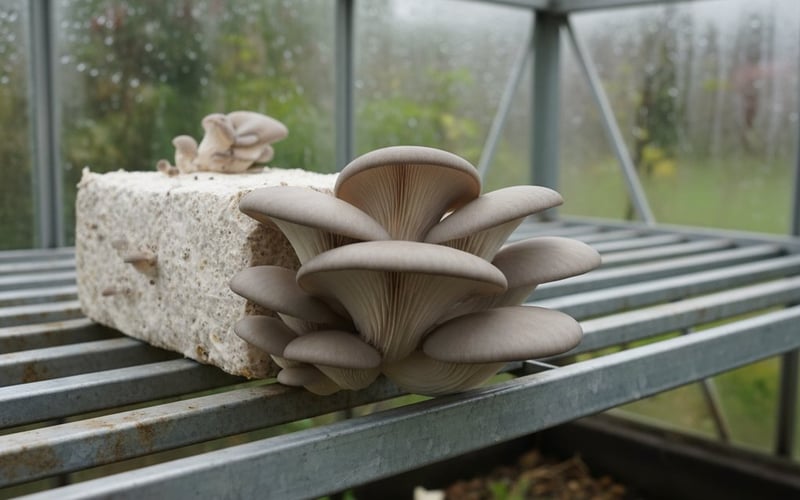
Use the supplier’s guidance on when and how to harvest. Cutting or twisting instructions can differ. Some kits produce further crops, often called flushes, after a rest or a soak; others have different aftercare. Do not promise yourself a fixed number of harvests or a particular weight.
Can mushrooms grow in an unheated greenhouse in winter?
Only while conditions remain suitable for the particular kit. An unheated greenhouse can become too cold during a winter night, even when the afternoon has felt mild. A cold frame or fleece may change the conditions, but neither guarantees that a block stays within its required range.
Check the forecast alongside the thermometer, especially before leaving a kit unattended. If temperatures will fall outside the supplier’s range, use an indoor spot that meets the instructions. You do not need to heat an entire greenhouse just to finish one kit.
The opposite problem can happen on a bright day. A block tucked away from the sun can still be sitting in warm greenhouse air. Recheck the location as the season changes rather than assuming a winter arrangement will also work in spring.
What should you do with a contaminated mushroom block?
Do not try to rescue it with salt, scraping or a home-made treatment. There is no useful “less than 20% mould is safe” rule for a reader to apply. Stop handling the affected area, keep the kit separate from other blocks and contact the supplier with clear photographs.
Normal mycelium can look different between kit species. Ask your supplier about unusual coloured growth. Follow the instructions for your own product rather than deciding that every white patch is harmless or every coloured patch is the same mould.
Do not harvest or eat mushrooms from a suspect block unless the supplier has resolved the concern. If it advises disposal, follow that advice rather than cutting off a patch and returning the block to the growing area.
What if the mushrooms look dry or unusually stretched?
Check the kit’s moisture, temperature and ventilation requirements. These symptoms can have more than one cause, so avoid changing everything at once. A photograph and a note of the conditions will give the supplier something useful to work with.
Can mushrooms share a greenhouse with tomatoes?
They can share the space if each crop’s needs are met. That does not make them a guaranteed growth-boosting partnership. Keep blocks away from direct sun and dirty runoff, leave access to water the tomatoes, and do not close vents just to make the whole greenhouse damper.
For the plant side of the arrangement, see our guide to growing greenhouse tomatoes. Let the mushroom kit’s instructions govern the block, rather than trying to give both crops identical care.
Making practical use of staging
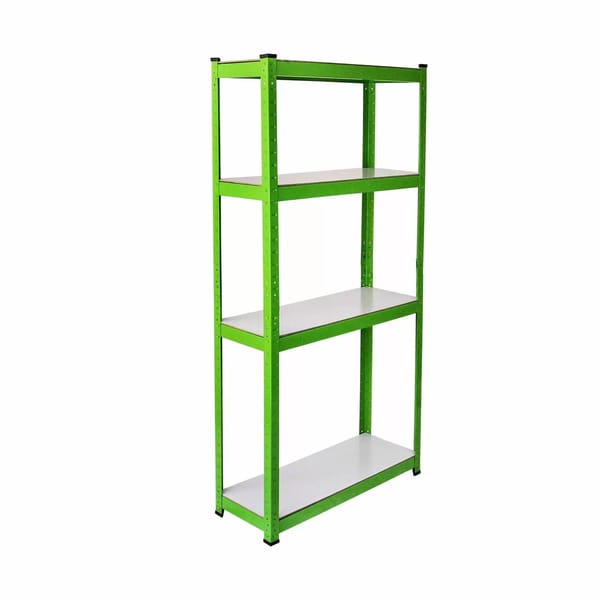
A stable shelf makes blocks easier to check and keeps the floor clear. Choose staging for the space you have, keep within its load limit and leave the block accessible. It provides a place to grow, not temperature or humidity control.
What can you do with spent mushroom substrate?
When a healthy kit is finished, check its disposal advice. Suitable spent growing material can often go into a mixed compost heap once plastic packaging has been removed. A finished block is different from one with suspected contamination: do not use composting as a reason to ignore the supplier’s advice on a problem kit.
Kit instructions used for this guide
Check your kit supplier's instructions for its temperature range, expected appearance and aftercare. Advice for a different kit may not suit yours.
Frequently asked questions
Do mushrooms need light or darkness to grow?
Follow the light instructions for your kit. Many ready-to-fruit kits need indirect light. A separate dark incubation stage is not something to add automatically.
Can you grow mushrooms in an unheated greenhouse?
Yes, if temperatures remain within your kit’s growing range. Check overnight lows and daytime warmth. Move the kit to a suitable indoor location when necessary.
How long does a mushroom kit take to grow?
Timing varies with the kit and growing conditions. Use the supplier’s expected window, allow for delays and contact it if the block is not progressing.
What is the easiest mushroom for a beginner to grow?
A ready-to-fruit oyster mushroom kit is a practical first choice. Choose a supplier with clear instructions and check that you can provide the conditions before ordering.
Are mushroom kits dangerous to other greenhouse plants?
A healthy kit is not automatically a problem for nearby plants. Keep it clean and separate from runoff, maintain ventilation and isolate any suspect block for supplier advice.
What should I do if my mushroom kit develops mould?
Keep it separate and contact the supplier with photographs. Do not scrape, salt or harvest from a suspect block while the concern remains unresolved.