Mealybug on Greenhouse Plants: A 30-Day Control Plan
Mealybug on greenhouse plants needs repeated control. Waxy adults, hidden eggs and mobile crawlers occupy different parts of the plant. Isolate affected pots immediately. Remove visible colonies, then inspect every 7 days for at least 30 days. Adult females reach about 4mm long. Warm greenhouses may support breeding throughout winter, especially on citrus, pelargoniums, orchids, cacti and succulents.
Key takeaways
- White wax in leaf axils is the first warning; sticky honeydew and black mould often follow.
- Move an affected plant at least 2 metres from others before pruning or treatment.
- Check the plant every 7 days for 30 days because one treatment rarely reaches every life stage.
- Quarantine every new greenhouse plant for one month, including apparently clean garden-centre purchases.
- Cryptolaemus montrouzieri can control colonies during warm months, but its larvae resemble mealybugs.
- Root mealybug needs a root-ball inspection; treating leaves alone will miss the infestation.
Expert Tip
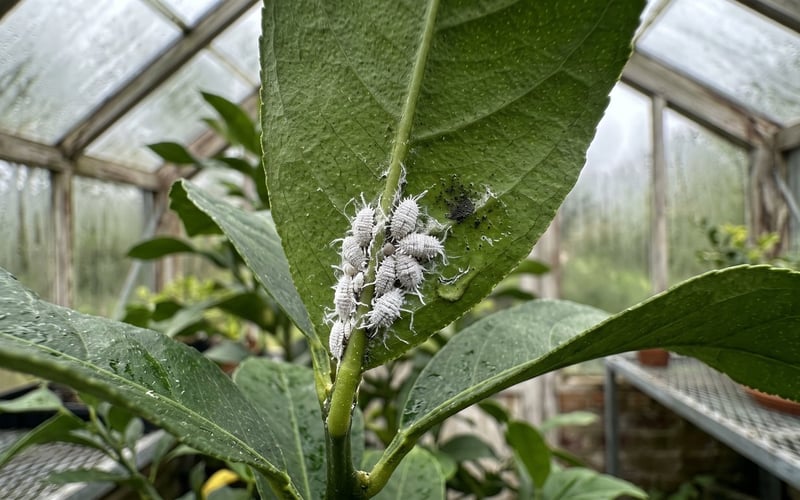
Since 2012, our customer enquiries have shown the same awkward seasonal pattern. Mealybug often appears on overwintered pelargoniums and citrus after plants are grouped under glass. The first colony sits deep inside a leaf joint. It is easily missed during the autumn move. By spring, several touching plants may carry white wax. Separate pots before fitting insulation or arranging winter staging.
How do you identify mealybug on greenhouse plants?
Mealybugs are soft, oval insects covered with white or grey wax. Adult females reach about 4mm long and retain visible legs. They gather in sheltered places rather than sitting openly on leaves.
Inspect leaf axils, stem joints, flower stalks and the underside of leaves. Check beneath loose bark on citrus and vines. Look around pot rims, labels and drainage holes too.
The white material may resemble mould, but a colony contains segmented insects beneath the wax. Sticky leaves indicate honeydew from sap feeding. Black sooty mould can then grow across that sugary film.
Heavy numbers weaken growth and may cause yellowing, leaf fall or wilting. Ants visiting a plant can also expose hidden honeydew.
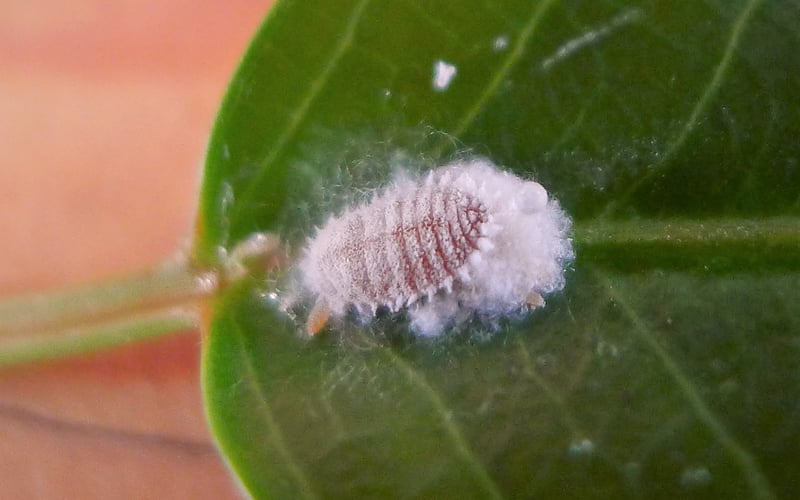
Identification features: Look for a soft oval body, powdery white wax, short edge filaments and a cottony ovisac.
Photograph by Gail Hampshire, CC BY 2.0, via Wikimedia Commons.
Mealybug, scale insect or woolly aphid?
Mealybugs remain mobile and have soft segmented bodies. Scale insects usually settle beneath a fixed shell-like covering. Woolly aphids produce wax too, but usually gather along stems and pruning wounds.
A hand lens helps. Mealybugs often have short wax filaments around the body edge. Longtailed species have much longer rear filaments.
What is the mealybug lifecycle under glass?
Protected warmth lets greenhouse mealybugs remain active throughout the year. Breeding slows during winter, but it may not stop inside heated structures.
Females place eggs beneath white wax, often deep inside a joint. Some species produce live young instead. Newly emerged crawlers have little wax and move between leaves, pots and neighbouring plants.
Those crawlers are the easiest stage to reach with contact treatments. Older insects develop a thicker wax coating and become harder to wet. Development can take about one month during midsummer warmth.
| Stage | What it looks like | Where to inspect | Control significance |
|---|---|---|---|
| Egg mass | White cotton-like wax | Axils, bark and pot edges | Often survives a single contact spray |
| Crawler | Tiny, mobile and lightly waxed | Young leaves and nearby pots | Most exposed treatment stage |
| Adult female | Oval, segmented and up to 4mm | Protected plant joints | Remove physically where possible |
| Root mealybug | White wax around roots | Root ball and drainage holes | Needs separate root treatment |
What should you do in the first 24 hours?
Isolation matters more than choosing a spray. Move the pot away before brushing, pruning or carrying out treatment.
- Place the plant on a washable tray at least 2 metres from other plants.
- Check every plant that touched it, including leaves crossing between pots.
- Remove fallen leaves and old flowers into a sealed bag.
- Prune heavily colonised tips where this will not damage the plant.
- Lift remaining colonies with a damp cotton bud or soft brush.
- Wash honeydew from leaves using plain water and a soft cloth.
- Mark the pot with the treatment date and inspect again after 7 days.
Matt's treatment tip
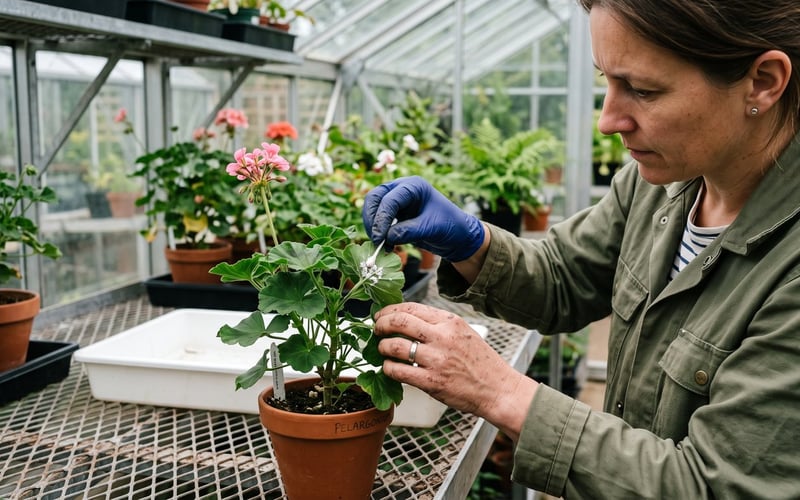
Do the removal over a white tray, not above neighbouring pots. Crawlers are difficult to see once they fall. Clean the tray and tool afterwards. Never return a treated pot to the main group because the visible wax has disappeared.
Which mealybug treatments work best?
The best method depends on colony size, plant value and greenhouse temperature. Light infestations respond well to isolation and repeated physical removal.
Warm-season biological control suits larger collections. A labelled fatty-acid or plant-oil product may help when direct coverage is possible. Always follow its current label.
Our greenhouse pest-control guide explains how monitoring and treatment fit together across the year.
| Rank | Method | Best use | Limits | Matt's verdict |
|---|---|---|---|---|
| 1 | Isolation and physical removal | One or two affected plants | Must be repeated weekly | Start here every time |
| 2 | Targeted pruning | Dense colonies on soft tips | Unsuitable for treasured growth | Fastest population reduction |
| 3 | Cryptolaemus predators | Warm greenhouse collections | Needs warmth and spray-free conditions | Best biological option |
| 4 | Labelled fatty-acid or plant-oil treatment | Reachable crawlers and adults | Wax and hiding places reduce contact | Useful when repeated correctly |
| 5 | Discarding the plant | Severe or recurring infestation | Loses the plant | Sensible when spread risk is high |
Can biological controls clear mealybug?
Biological controls can suppress mealybug when the greenhouse stays warm enough. The predatory ladybird Cryptolaemus montrouzieri eats adults, young and eggs.
Its shaggy white larvae look like oversized mealybugs. Learn that difference before releasing them, or you may remove the predator.
The RHS places the useful release window mainly between May and September. Parasitic wasps can help when pest numbers remain low. Supplier instructions set the required temperature and release rate.
Do not combine predators with an incompatible insecticide. Our guide to an environmentally responsible greenhouse covers biological controls and lower-residue growing methods.
Should you use sprays on mealybug?
Contact products only work when they reach the insect. The waxy coating and tight hiding places make complete coverage difficult.
Use a product currently labelled for the plant, setting and intended pest. Treat upper and lower leaf surfaces, axils and stems. Never exceed the label rate.
Test sensitive plants on one leaf first. Oils can mark some succulents, ferns and young foliage. Keep treatments away from open flowers and active biological controls.
Repeat only at the label interval. A stronger mixture will not penetrate hidden eggs, but it may scorch the plant.
A practical 30-day treatment plan
A month-long plan catches crawlers emerging after the first clean. Use one treatment route throughout unless its instructions say otherwise.
- Day 0
- Isolate the plant, remove debris and photograph each colony. Check neighbouring pots and nearby staging.
- Day 1
- Prune dense colonies, then remove exposed insects. Apply a labelled treatment only if suitable.
- Day 7
- Inspect every previous colony site. Look for tiny crawlers on new growth and beneath leaves.
- Day 14
- Repeat physical removal or the chosen label programme. Clean the quarantine tray and nearby hard surfaces.
- Day 21
- Inspect the root zone if leaf colonies return quickly. Check drainage holes for white wax.
- Day 30
- Return the plant only when two inspections find no insects, fresh wax or sticky honeydew.
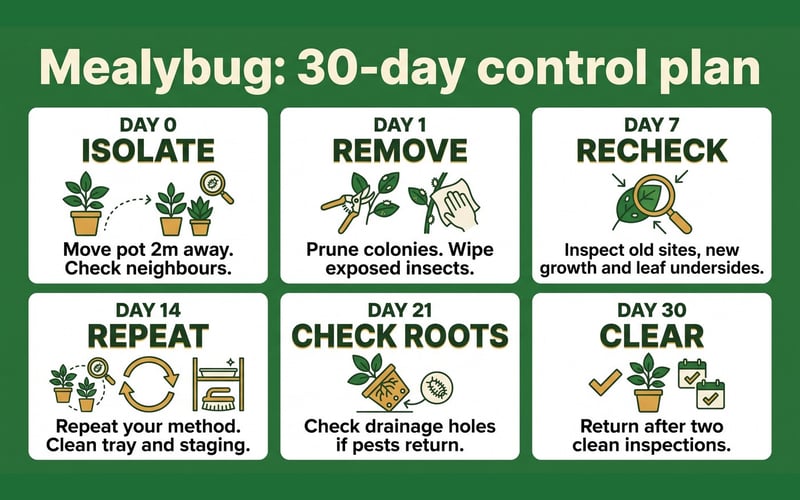
Keep a written date beside each pot. Treating by memory usually means the second inspection happens too late.
How should greenhouse staging help prevention?
Good staging makes pests easier to see and pots easier to separate. Slatted shelves also prevent water and fallen debris collecting beneath plants.
Leave enough space to view each pot rim and rotate the plant. Avoid letting citrus branches touch pelargoniums or neighbouring greenhouse frames.
Clean aluminium staging with warm water before plants move inside. Our detailed greenhouse cleaning guide covers glass, frames and floors.

|
Matt's Pick for visible, washable plant spacingBest for: Keeping quarantine and overwintering pots off the greenhouse floor. Why I recommend it: I prefer slatted aluminium staging because every pot rim stays visible. The 1200mm by 500mm surface is easy to wipe, while two levels separate plants and tools. Price: £99 |
How do you prevent mealybug on overwintered plants?
Autumn inspection prevents most winter outbreaks. Examine every plant before it joins the protected collection.
Our guide to overwintering plants explains temperature, watering and frost protection for pelargoniums and citrus. Add pest quarantine before those plants move inside.
- Quarantine new arrivals for at least one month.
- Remove dead leaves, spent flowers and loose plant labels.
- Stop soft, nitrogen-rich growth before winter.
- Space pots so leaves cannot bridge between plants.
- Inspect leaf joints every 7 days during the first month indoors.
- Check behind insulation clips and liner edges during each inspection.
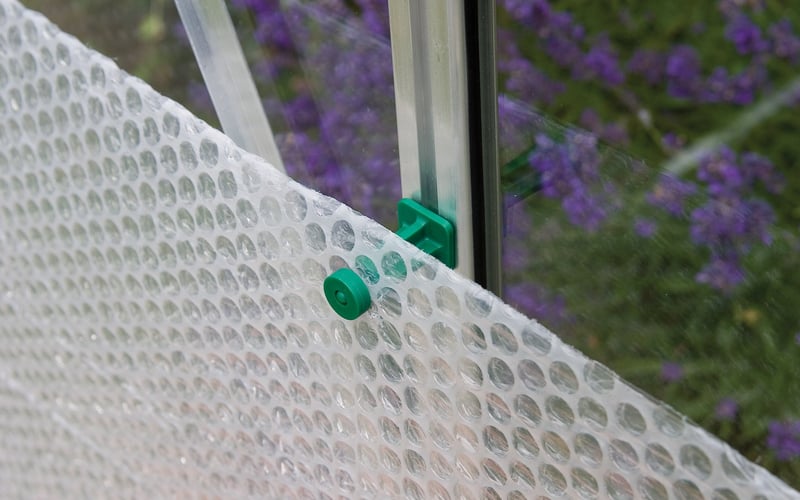
Matt's Tip: inspect before fitting insulation
I fit the liner only after every overwintering pot has passed inspection. The Elite clips hold the bubble layer 25mm from the glass. That gap helps condensation control, but liner edges can conceal stray crawlers. Keep the lowest edge removable for monthly checks.
Does greenhouse temperature affect mealybug?
Warm conditions speed development and let breeding continue through winter. Heating should protect the plant, not create summer conditions in January.
Set the thermostat for the most tender plant in the collection. Avoid heating unused air above that requirement. Ventilate on suitable mild days and maintain gentle circulation.
A thermostatic heater gives better control than an always-on appliance. Fan-only operation can move air during mild periods, although airflow does not kill mealybug.
Browse our current greenhouse heaters. Check fuel type, ventilation, clearances and output against your greenhouse and plants before choosing.
Our spring greenhouse preparation guide explains when to clean after winter and reset monitoring.
Can mealybug live in greenhouse soil?
Some Rhizoecus species feed on roots and remain hidden inside potting compost. Leaf treatment will not reach them.
Suspect root mealybug when a plant weakens without visible leaf colonies. White wax around drainage holes is another warning. Slide the root ball out over a washable tray.
Examine the outer roots and compost surface. Keep that plant separate from clean pots and reused compost. Severe root infestations are difficult to clear reliably.
Do not shake suspect compost across the greenhouse floor. Bag discarded compost and clean the pot before reuse.
Five mistakes that let mealybug return
Recurring infestations usually come from missed insects, not resistance. The hiding places remain untouched while exposed adults disappear.
- Stopping after one clean: hidden eggs can produce crawlers after visible adults have gone.
- Treating only upper leaves: inspect axils, stem joints, bark, labels and pot rims.
- Returning the pot too soon: keep quarantine until two inspections are clear.
- Combining predators and sprays: check compatibility before releasing biological controls.
- Using unlabelled mixtures: washing-up liquid, alcohol and improvised oils may scorch plants.
Routine inspection beats emergency spraying. Browse our greenhouse care and growing accessories for washable staging, insulation and temperature controls.
Equipment for orderly winter plant care
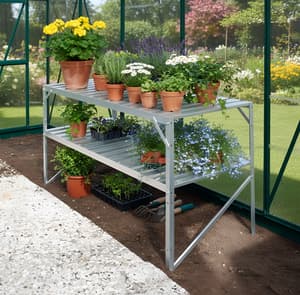
"I would rather create space between ten pots than spray fifty touching leaves. Slatted staging makes that possible. It also exposes the pot rims and drainage holes where a hidden problem first shows."
- Matt W, Greenhouse Stores
Frequently asked questions
What kills mealybugs immediately?
Physical removal kills exposed mealybugs immediately. It does not reach hidden eggs or root colonies. Repeat inspections every 7 days for at least 30 days.
How often should I treat mealybug?
Inspect the plant every 7 days for one month. Repeat any commercial treatment only at its stated label interval.
Can mealybugs spread between greenhouse plants?
Yes, mobile crawlers can move across touching leaves and nearby surfaces. Separate affected pots by at least 2 metres during treatment.
Do mealybugs survive winter in a greenhouse?
Yes, protected colonies can remain active throughout winter. Breeding slows in cooler conditions but continues inside heated greenhouses.
Should I throw away a plant with mealybug?
Discard heavily infested plants when treatment risks the wider collection. Seal the plant before removal and do not compost infested material.
How can I tell if mealybugs are in the roots?
Look for white wax around drainage holes and outer roots. Unexplained yellowing or wilting can justify a careful root-ball inspection.