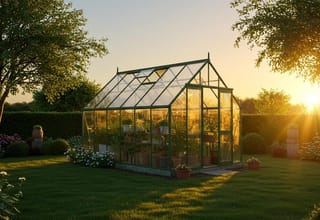
How to overwinter geraniums in a greenhouse
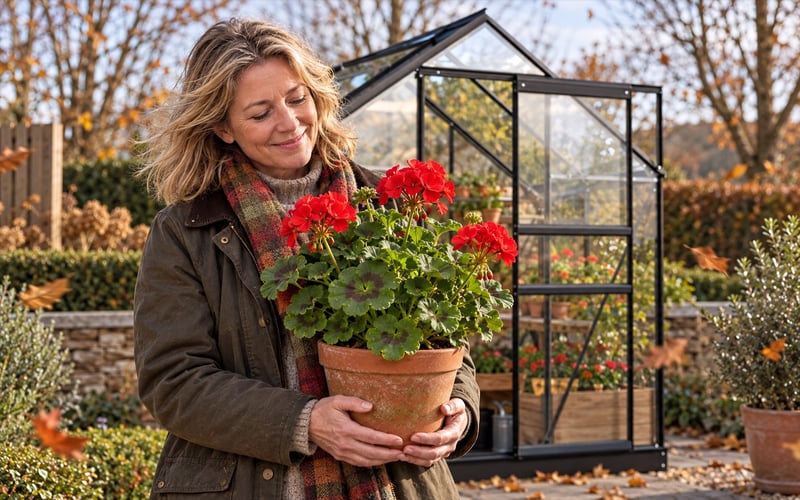
To overwinter geraniums, bring them into a bright, frost-free greenhouse before autumn frosts arrive. Keep plants in pots, trim them to fit your space and let the compost dry between light waterings. These are tender pelargoniums, rather than hardy garden geraniums. With a little attention through winter, you can keep favourite plants for next summer instead of starting again.
Key takeaways
- Bring tender geraniums under cover before frost, even if they still have flowers.
- Check the overnight temperature; an unheated greenhouse can freeze inside.
- Give leafy plants a bright shelf and room for air to circulate.
- Water according to the compost, rather than keeping a summer watering routine.
- Take cuttings while healthy shoots are available if you have little winter space.
View and buy the Vitavia 6x4 Black Venus 2500 with toughened glass
Expert tip
Label your favourite colours before the last flowers fade. A plain pot label saves plenty of guesswork when you replant next spring.
Which geraniums need bringing inside?
The bedding geraniums used in summer pots and hanging baskets need protection from frost. Their botanical name is Pelargonium.
This guide covers those tender plants, particularly the familiar upright types with rounded leaves and red, pink or white flowers. Trailing ivy-leaved pelargoniums also need a sheltered winter home.
Hardy geraniums, often called cranesbills, are different plants. They usually stay in garden borders through winter. Check the label if you are unsure which you have.
You needn't save every pot. Start with the plants you particularly like, or a colour that has been difficult to replace. Set aside anything looking unhealthy until you have checked what is wrong.
For a mixed collection of tender plants, our guide to overwintering plants under glass covers the wider winter routine.
When should you bring geraniums into the greenhouse?
Move them before the first autumn frost reaches your garden. September is a useful time to clear a shelf and decide which plants to keep.
The actual move depends on your local forecast. A sheltered coastal garden and an exposed inland plot won't follow the same timetable. Bring pots in while conditions are still manageable, rather than rushing outside after a frost warning at bedtime.
Check underneath leaves and around stem joints before carrying plants inside. Remove fallen leaves from the compost and clear any slugs hiding beneath the pots.
For plants growing in a border, lift them carefully and pot them into containers with drainage holes. Choose a pot that comfortably holds the roots, rather than a much larger one.
A pot already sitting on the patio can usually come inside as it is. Leave decorative outer pots behind if they collect water.
Should you cut geraniums back for winter?
Trimming makes plants easier to fit on a greenhouse shelf, but every plant doesn't need the same haircut.
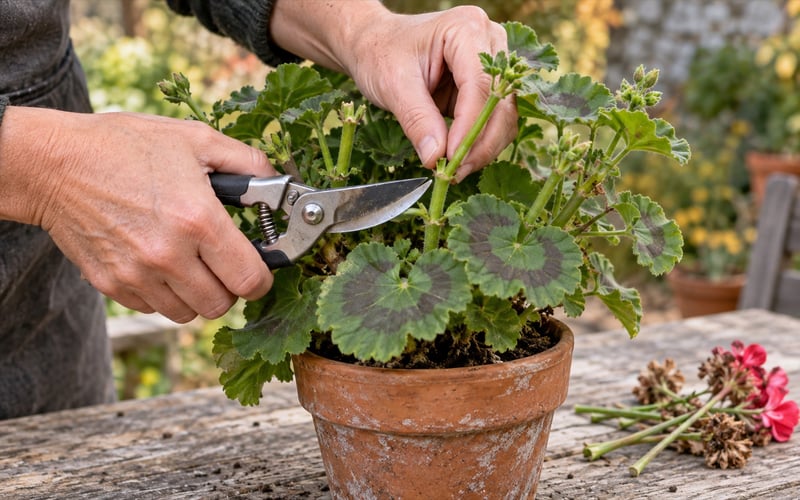
Remove spent flowers and damaged growth first. Shorten long stems with clean secateurs, cutting just above a leaf joint. Keep a balanced shape with healthy buds left on the stems.
For common bedding pelargoniums, cutting back to roughly 10cm is an option when space is tight. If you have plenty of room, keep more leafy growth and reshape the plant in spring instead.
Older woody plants and trained standards need a more considered approach. Keep the framework you want to grow on, rather than cutting everything to one height.
Stand back and look at the pot before making another cut. You're trying to fit a manageable plant onto the shelf, not remove every leaf.
What if you only have a small growing space?
A few favourite pots don't need a large greenhouse. Start with the space you have and how you want to reach your plants.
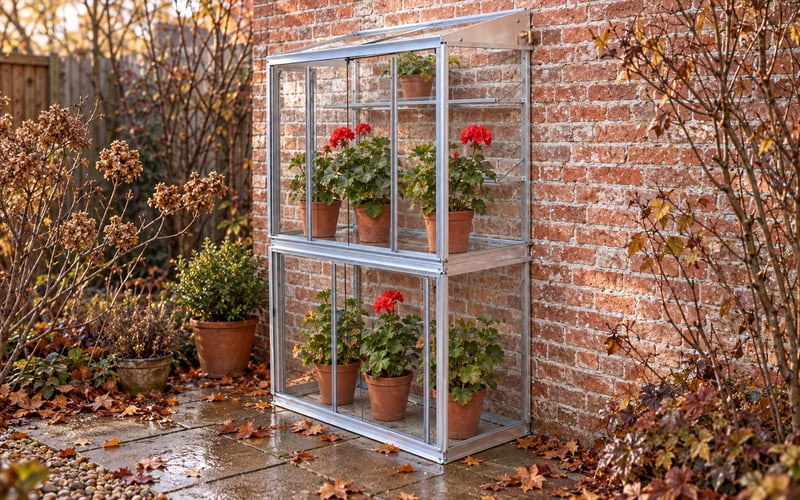
A slim greenhouse against a wall
The Access Hampton 2x3 is a shallow lean-to for a patio or a spare stretch of suitable wall. It measures 1000mm wide and 530mm deep, with sliding glass panels and shelves for smaller pots.
Keep taller geraniums where they have headroom, and leave space to reach in for watering.
View and buy the 2x3 Access Hampton Lean To Greenhouse with toughened glass
A compact greenhouse you can step inside
The Vitavia 6x4 Black Venus 2500 gives you a walk-in space with a single sliding door. Its footprint is 1930mm wide by 1310mm deep, so plan the shelves around a clear entrance.
Both options give plants shelter, but still need the frost-free winter conditions explained below.
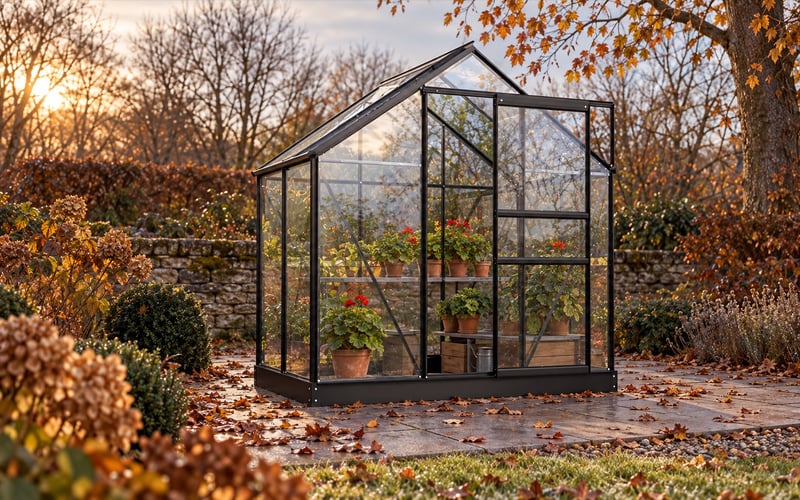
View and buy the Vitavia 6x4 Black Venus 2500 with toughened glass
How do you arrange geraniums in a greenhouse?
Give leafy geraniums the brightest practical shelf, with space between pots and leaves kept away from the glazing.
Clear away tired summer crops before moving your winter plants in. A crowded corner behind old tomato stems makes checking and watering awkward.
Put the pots where you can reach them without shuffling the whole collection. Keep taller plants towards the back, provided they don't shade smaller ones. An empty saucer is fine for catching drips, but tip away water after watering.
The Vitavia two-tier silver staging shown below is 1200mm wide and 500mm deep. Its upper shelf gives you an accessible place for pots. Spare containers can go underneath, leaving the brighter space for plants.
If you need a different size, browse our staging and shelves for organising your greenhouse. Measure the remaining walkway before choosing a bench.
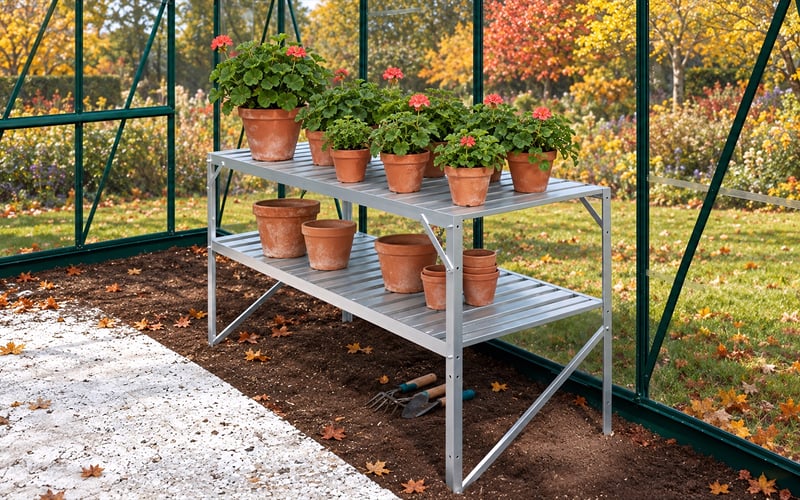
View and buy Vitavia 2 Tier Silver Staging: £99
Can geraniums survive in an unheated greenhouse?
They can overwinter there if it stays frost-free, but glass alone won't keep frost out through every cold spell.
Check the overnight minimum beside your plants. A warm afternoon reading tells you very little about what happened before sunrise. Place a max–min thermometer away from direct sun and heater airflow, following its fitting instructions.
Read and reset it regularly so you can see how the greenhouse behaves. If temperatures are approaching freezing, arrange suitable greenhouse heating or move the pots somewhere frost-free.
Rooted cuttings benefit from slightly warmer conditions; around 7°C is a useful winter guide. A bright indoor windowsill can be a simpler home for a few young plants.
If you're setting up heating, our greenhouse heating-cost guide explains how power use affects the bill. Choose equipment for the space and conditions, rather than buying by the greenhouse's floor size alone.
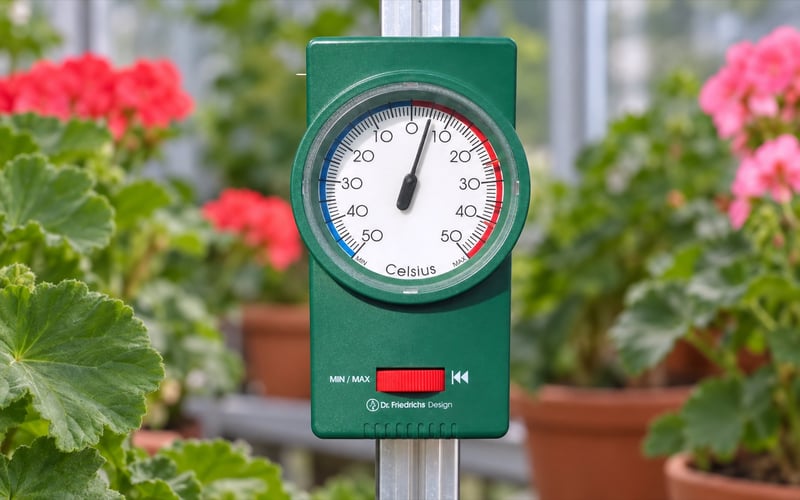
View and buy the Vitavia Max Min Thermometer
Would greenhouse insulation help?
Bubble insulation can reduce heat loss, particularly when you're also using a heater. It doesn't produce warmth itself.
Fit it to the greenhouse structure, leaving the door and opening vents usable. Avoid wrapping leafy geraniums in bubble plastic. They still need light and circulating air.
For an Elite greenhouse, the bubble-plastic kit below comes with lining clips for Elite glazing bars. Choose fittings made for your greenhouse frame rather than assuming all clips are interchangeable.
Check your own frame and fittings before ordering. Our step-by-step greenhouse insulation guide explains the fitting approach.
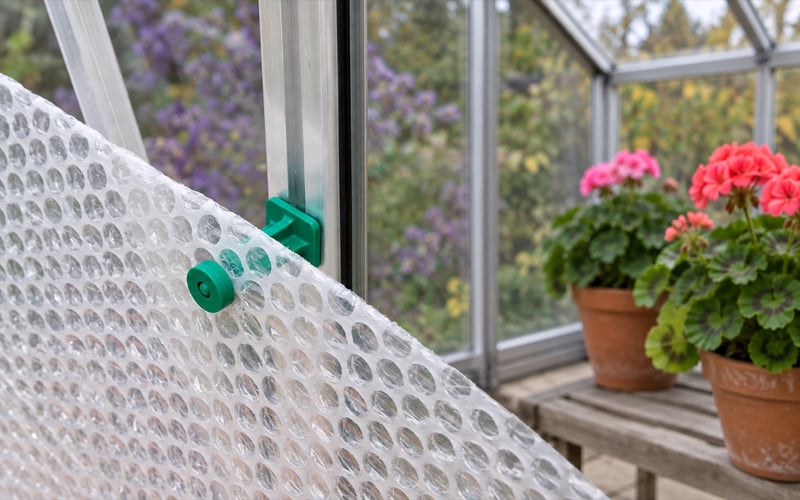
View and buy Elite Bubble Plastic with 30 Lining Hooks Clips
How often should you water geraniums in winter?
Check the compost before watering; winter plants don't need the frequent drinks they needed on a sunny patio.
Push a finger into the compost and lift the pot if it is manageable. A pot that still feels heavy and damp can wait. When the compost has dried, water sparingly and let excess water drain away.
A leafy plant in a brighter, warmer spot will use more water than a heavily trimmed plant kept cool. Check small pots separately, as they can dry before larger containers.
Use a narrow-spouted can to reach the compost without soaking the foliage. Keep the can beside your winter shelf if that makes checking easier, but don't water simply because it is there.
Plants resting with little growth don't need feeding. Resume feeding when fresh growth is underway, following the fertiliser label. More feed won't compensate for a dark winter corner.
What should you check during winter?
A quick look through the pots is usually more useful than adding another treatment to your routine.
- Pick off dead leaves before they collect around the stems.
- Look under leaves and around growing tips for pests.
- Check the compost and empty any water left in saucers.
- Open a vent on mild days to refresh the air, then adjust it as temperatures fall.
Grey, fluffy growth on dying leaves needs attention. Remove affected material and improve spacing and airflow. Our grey mould guide explains what to look for.
If you find white cottony patches in stem joints, separate the affected pot while you identify them. The mealybug identification and control guide has the next steps.
A few yellowing old leaves don't automatically mean the plant is lost. Check for healthy stems and buds before deciding what to keep.
Can you save space by taking geranium cuttings?
A few small cuttings can keep a favourite variety going when the parent plant takes up too much room.
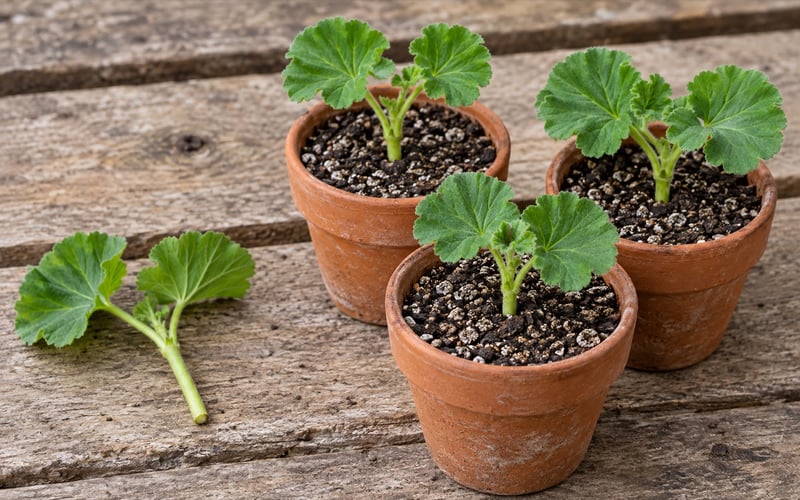
Late summer is a useful time to start, while you have healthy shoots available. Choose a non-flowering tip about 8cm long. Cut just below a leaf joint and remove the lower leaves, leaving a small amount of foliage at the top.
Insert the base into a small pot of free-draining propagation compost. Keep the leaves above the surface and water the compost gently. Place the pot in bright light away from strong direct sunshine.
Let roots develop before disturbing the cutting. Fresh growth is encouraging, but don't keep pulling the stem to check underneath. Once established, keep the young plant bright and frost-free through winter.
Our greenhouse propagation guide covers the equipment and growing space used for cuttings.
When can geraniums go back outside?
Wait until the risk of frost has passed in your area and the plants have adjusted to outdoor conditions.
As spring growth starts, tidy dead stems and repot plants that need fresh compost or more root space. Increase watering as the plants begin using it, rather than flooding a still-resting rootball.
On suitable days, stand pots outside in a sheltered spot, bringing them back under cover overnight. Gradually extend their time outdoors. Our hardening-off guide explains that gradual change.
Don't let one warm weekend decide the move. Keep watching the forecast until the pots can stay outside overnight. Then return your saved favourites to the patio or baskets, ready for another growing season.
Frequently asked questions
Do geraniums come back every year?
Tender pelargoniums can live for several years if protected from frost. Keeping healthy plants under cover gives you the chance to grow them again next summer. Hardy garden geraniums are different and usually remain outside.
Can I leave geraniums outside all winter?
Bring tender geraniums into frost-free shelter for reliable overwintering. A sheltered patio may suit them during mild weather, but it is exposed when a cold spell arrives.
Should I remove all the leaves before winter?
No, healthy leaves can stay on plants overwintering in a bright position. Remove dead or damaged foliage and trim plants to fit the available space. Heavily cut-back plants need much less water.
Can I overwinter geraniums in a dark shed?
Leafy potted plants need light; choose a bright, frost-free place. Bare-root storage is a separate method for suitable mature plants. For a small greenhouse collection, keeping plants in pots makes checking their condition simpler.
Do I need a greenhouse to save geraniums?
No, a bright indoor windowsill can hold a few plants or rooted cuttings. Keep them away from hot radiators and check the compost regularly. A greenhouse becomes useful when the collection outgrows the windowsills.