October gardening jobs: UK autumn to-do list
October gardening jobs help UK gardens settle into autumn and prepare for winter. Protect tender plants before frost, harvest ripe crops and plant spring bulbs while the soil is workable. This autumn garden jobs checklist covers 15 tasks, including October jobs in the greenhouse. Start with weather-sensitive jobs, then fit planting, leaf clearing and winter crop care around your available time.
Key takeaways
- Move frost-tender plants under suitable cover before cold nights arrive.
- Plant remaining daffodils promptly; tulips can wait until November.
- Clear finished greenhouse crops and clean the glass before moving winter plants inside.
- Harvest ripe apples and squash, keeping damaged produce out of storage.
- Collect leaves from lawns and paths, but leave some shelter for wildlife in borders.
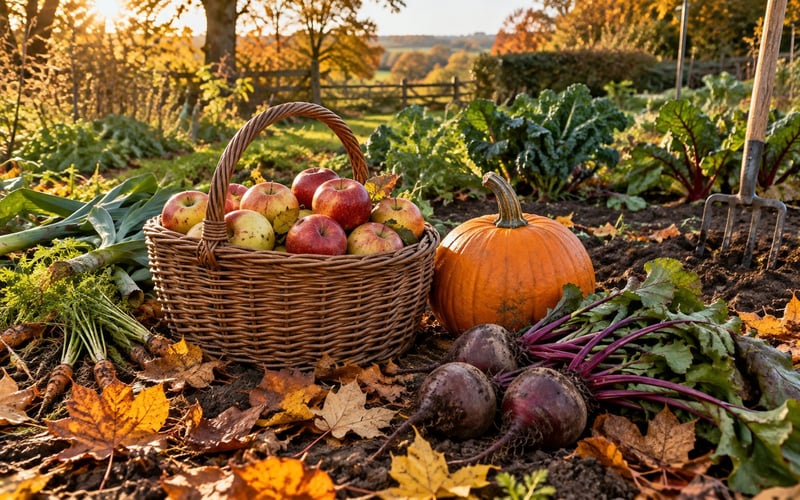
Expert Tip
Choose October jobs by the weather. A frost forecast makes tender plants urgent; a mild, dry afternoon suits planting. There is no single first-frost date for every UK garden.
October gardening jobs to-do list
Protect vulnerable plants and bring in ripe crops before starting the general tidy-up.
Work through these 15 autumn jobs in the garden as conditions allow. Start at the top when frost is forecast.
| October job | When or how to do it |
|---|---|
| 1. Protect tender plants | Move into suitable shelter before temperatures fall below their needs. |
| 2. Harvest pumpkins and squash | Bring mature fruit inside before frost. |
| 3. Clear finished greenhouse crops | Keep productive plants until cropping ends; remove spent ones. |
| 4. Clean greenhouse glazing | Wash glass, staging and pots before winter plants move in. |
| 5. Check greenhouse heating and vents | Test equipment and measure overnight minimum temperatures. |
| 6. Plant winter salads under cover | Use seasonal varieties and check sowing dates on packets. |
| 7. Plant remaining spring bulbs | Plant daffodils promptly; keep tulips for November. |
| 8. Fill pots with winter bedding | Try pansies or violas in freely draining containers. |
| 9. Divide suitable hardy perennials | Work while soil is moist and workable, then water divisions. |
| 10. Plant garlic and overwintering onions | Choose autumn varieties and well-drained soil. |
| 11. Pick and store ripe apples | Store sound fruit and check regularly for rot. |
| 12. Cover cleared vegetable beds | Spread garden compost or sow a suitable green manure. |
| 13. Clear leaves from lawns and paths | Rake regularly; mow only while grass grows on firm ground. |
| 14. Start a leaf mould pile | Keep collected leaves damp in a cage or ventilated sacks. |
| 15. Check pots, gutters and tools | Clear drainage holes and gutters, then clean tools after use. |
October jobs in the greenhouse
October is the changeover from summer cropping to winter growing and plant protection.
Give this job its own afternoon. An empty bench is much easier to clean than one packed with pots.

View the Vitavia Apollo 6200 6x10 greenhouse with toughened glass.
Clear summer crops and clean the greenhouse
Remove finished crops before washing the glazing, staging and empty pots.
Pick remaining sound tomatoes for ripening indoors. Take out dead plants, old growing bags and fallen leaves. Check beneath pots for slugs and other pests.
Remove summer shading when it is no longer needed. Wash glazing with a soft brush and a cleaner suitable for the material. Follow the greenhouse maker's care instructions, especially for polycarbonate panels. Rinse away residue and let surfaces dry.
Clear gutters and check that downpipes drain freely. Look over the door, roof vents and glazing fixings while everything is accessible.
Greenhouse maintenance tip
Replace cracked glazing and missing fixings before winter weather arrives. Use parts intended for your greenhouse. Keep opening vents working when fitting insulation.
Plant winter salads and sow sweet peas
Hardy salads suit an unheated greenhouse, while tender plants need temperatures matched to their needs.
Winter lettuce and lamb's lettuce are useful choices for autumn growing. Choose varieties labelled for the season. Check packet timings before sowing, because October growth slows as daylight fades. Small plants started earlier usually give a quicker harvest than a late sowing.
Leave room between pots and keep a clear path for watering. Our greenhouse salad growing calendar helps you plan the next sowing.
You can also sow sweet peas under cover in October for planting out next spring. Follow packet instructions and protect seeds from mice. Keep established seedlings in bright, cool conditions.
Bring tender plants under suitable cover
Inspect tender plants before bringing them inside. Remove dead foliage and keep plants with pests apart from healthy ones. Use our guide to overwintering plants to check which need extra warmth.
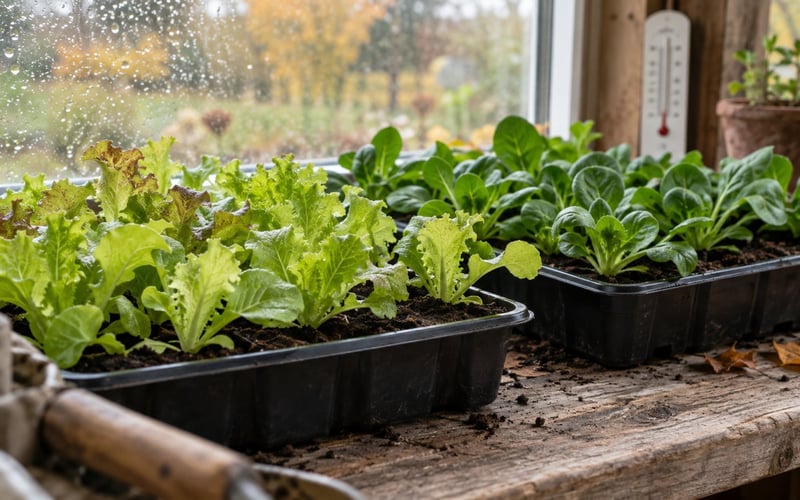
Check overnight temperatures and keep air moving
An unheated greenhouse can fall below freezing during cold weather.
Check the overnight minimum at plant height, away from direct sunlight and heaters. A Vitavia Max Min Thermometer records temperature extremes and costs £30. Reset it after taking the reading so you can compare nights.
Test existing heating before you need it. If your plants need frost-free conditions, browse our heaters for winter greenhouse growing. Choose equipment suited to the space and the plants you intend to keep.
Open vents on mild days, then reduce ventilation as temperatures fall. Water when the compost needs it, preferably in the morning. Avoid leaving foliage wet overnight. Bubble insulation can reduce heat loss, but also reduces light; fit it where it serves a clear purpose.
What should you plant in October borders?
Plant remaining spring bulbs, winter bedding and suitable hardy perennials while the soil is workable.
Daffodils and crocuses are best planted earlier in autumn. If yours are still in bags, plant them promptly. Tulips can wait until November, so there is no need to rush every bulb into the ground this month.
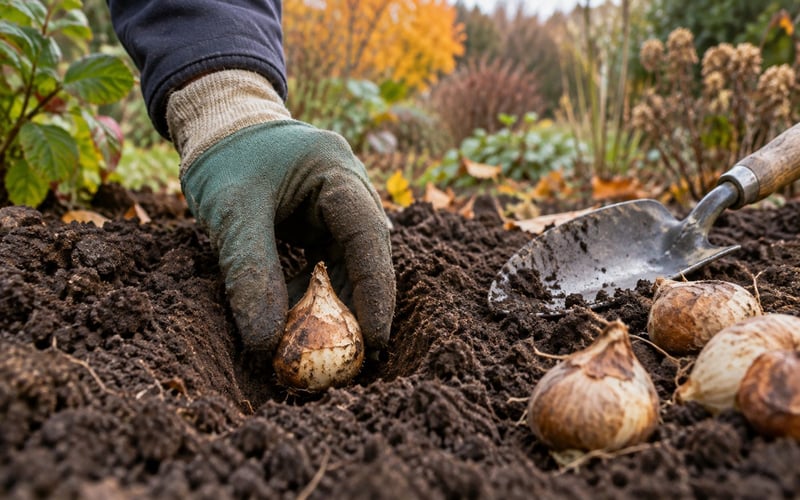
Follow the packet's depth and spacing instructions. Plant bulbs point upwards and choose ground that drains freely. Pots are useful where borders stay wet.
Fill gaps near the house with winter pansies or violas. Divide congested hardy perennials where appropriate, watering new divisions after planting.
Keep healthy seedheads and sturdy stems where they provide winter interest or wildlife shelter. Remove diseased material. In colder or wetter gardens, lift dahlias after frost blackens their foliage and store them frost-free.
What needs doing in the vegetable patch?
Harvest frost-sensitive crops and use empty ground for autumn planting or soil protection.
Cut pumpkins and winter squash before frost, leaving a short stem attached. Let mature skins dry in a warm, airy place. Store only sound fruit and use bruised crops first.
Lift remaining potatoes when conditions allow, discarding damaged or rotten tubers. Hardy leeks and parsnips can stay outside for later picking where the ground remains accessible.
Plant autumn garlic and overwintering onion sets in well-drained soil. On heavy, wet ground, starting garlic in modules under cover can help. Our greenhouse garlic growing guide explains the approach.
In mild areas, sow an overwintering broad bean variety if the seed packet recommends autumn sowing. Otherwise, leave that job until spring. Spread garden compost over cleared beds, or sow a suitable autumn green manure.
How should you harvest and store October fruit?
Pick apples as they ripen and store only clean, undamaged fruit.
Cup an apple and lift it gently with a slight twist. Ripe fruit should come away easily. Different varieties ripen at different times, so work around the tree over several visits.
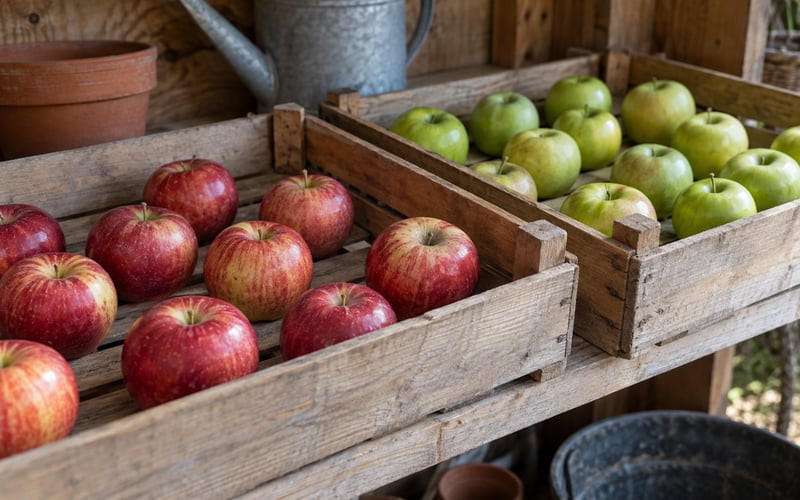
Place storage apples in shallow trays somewhere cool, frost-free and ventilated. Check regularly and remove any showing rot. Use windfalls promptly for cooking or preserving if they are sound enough.
Clear fallen, rotting fruit from around trees. Plant container-grown fruit bushes when the soil is workable. Order bare-root plants for planting during their dormant season.
After summer raspberries finish, remove the canes that fruited and tie in healthy new ones. Leave autumn-fruiting raspberries until late winter for their usual annual cut-down.
What should you do with leaves and the lawn?
Clear leaves from grass and paths, then save them to make leaf mould.
A thick, wet layer blocks light from the lawn and makes paths slippery. Rake little and often during leaf fall. Mow only while grass is growing and the surface is firm enough.
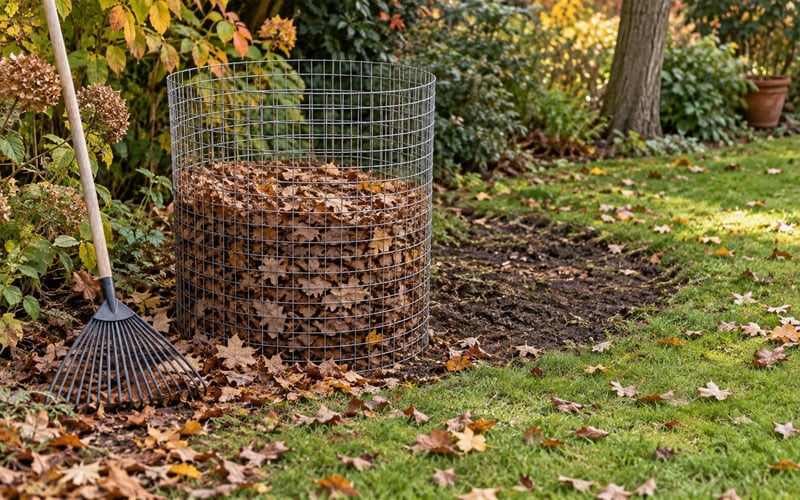
Put damp leaves in a wire cage or ventilated sacks. Leave them to break down into a useful soil improver. Keep the pile moist. Most leaves take about two years to break down fully, so label the pile with its starting date.
Leave some leaves beneath hedges and in quiet corners for wildlife. Check carefully before disturbing existing piles. Keep bird baths clean and topped up, and retain healthy seedheads for birds.
Remove heavy leaf accumulations from ponds before they sink. Work carefully around wildlife and keep nearby paths clear.
How should you care for patio pots and houseplants?
Bring tender plants into suitable shelter and reduce watering as their growth slows.
Check individual temperature needs before choosing a winter spot. A tropical houseplant may need a warmer room than a frost-free greenhouse provides.
Inspect leaf undersides and pot rims before bringing plants indoors. Remove dead leaves and check for pests. Keep pots away from radiators and give them the brightest suitable position available.
Check compost before watering, rather than keeping your summer routine. Empty standing water from saucers when it is no longer needed.
Outside, keep drainage holes clear in winter containers. Move vulnerable pots away from exposed corners where practical. Grouping pots makes them easier to check, but does not make tender plants frost-hardy.
Which autumn jobs in the garden can wait?
Tulip planting and some pruning can wait, while frost protection and harvesting need timely attention.
Leave tulips until November and order bare-root trees for planting once dormant stock becomes available. Keep autumn-fruiting raspberries for their usual late-winter pruning. Avoid a general cut-back of every shrub; flowering times and pruning needs vary.
After heavy rain, postpone digging and lawn work until the ground is firm enough. Keep healthy seedheads and quiet leaf piles for wildlife. If your time is limited, protect vulnerable plants first, then tackle one area each weekend.
Frequently asked questions
What autumn garden jobs should I do in the UK?
Protect tender plants, plant spring bulbs and keep lawns clear of fallen leaves. Harvest remaining crops, cover empty beds with compost and prepare your greenhouse for winter. Choose the order around local weather.
What are the most important October garden jobs?
Protect tender plants, harvest ripe crops and prepare the greenhouse for winter. Then tackle bulbs, fallen leaves and autumn planting as the weather allows.
Is October too late to plant spring bulbs?
No, many spring bulbs can still be planted in October. Plant remaining daffodils promptly. Tulips can wait until November. Avoid planting into waterlogged soil.
What can I grow in an unheated greenhouse in October?
Winter lettuce and lamb's lettuce are useful autumn greenhouse crops. Choose seasonal varieties and follow packet timings. Earlier sowings or small plants establish faster as daylight decreases.
Do I need to heat my greenhouse in October?
Heating depends on your plants and the lowest temperatures inside. An unheated greenhouse is not reliably frost-free. Check overnight readings and provide warmth where your plants need it.
Should I cut everything back in October?
No, healthy seedheads and sturdy stems can stay for winter interest and wildlife. Remove diseased growth and check pruning times for individual plants. Autumn raspberries are normally cut down in late winter.
Should I keep watering greenhouse plants in October?
Yes, water when the compost needs it, usually less often than in summer. Water in the morning where possible. Avoid leaving pots standing in water or foliage wet overnight.