How to Keep Rats Out of Your Greenhouse and Shed
Keeping rats out starts with food, shelter and access. Store seeds securely, clear fallen produce and inspect gaps around the greenhouse or shed. Droppings, gnawing and repeated runs can indicate activity, but small droppings alone do not confirm rats. Repair vulnerable areas safely and get professional help for an active infestation. A greenhouse draught strip is not a rat-proof barrier.
Key Takeaways
- Remove easy food sources. Clean up spilled seed and fallen fruit, and store feed in secure containers.
- Inspect the base without moving the greenhouse. Structural repairs need a safe plan and suitable help.
- Repair door gaps, but do not rely on rubber or brush draught strips to stop rats.
- Identify the animal before choosing control. Mice and other wildlife can leave similar signs.
- Coordinate proofing with control. Do not knowingly seal animals inside a structure.
- Ask for professional help if activity persists or there is a safety risk.
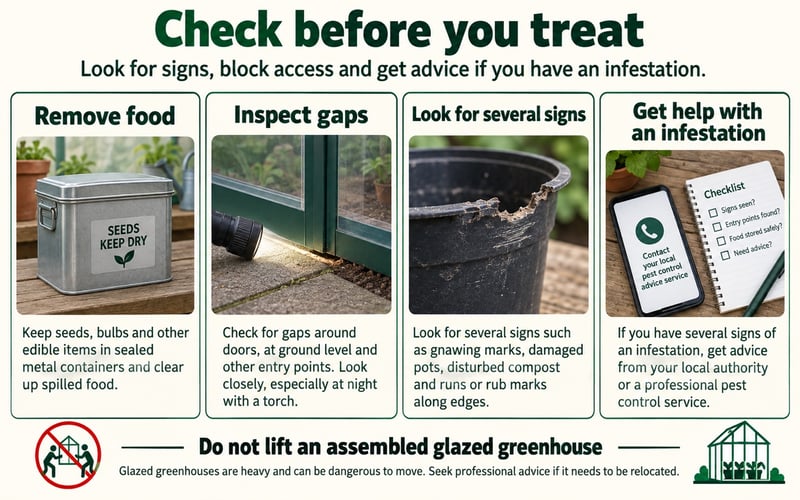
Illustrated prevention checklist. Do not lift an assembled glazed greenhouse to fit mesh underneath.
Expert Tip
A damaged seal deserves repair, but pest control and draught reduction are different jobs. First establish where the animals are travelling and what attracts them. Repairing one visible gap will not solve an infestation if food and another entry route remain.
How do rats get into a greenhouse?
Inspect the joint between the base and ground, damaged doors, service openings and nearby shelter. Look for fresh gnawing or disturbed soil. Rats can climb and burrow, so check more than the doorway.
Small gaps matter, but a single measurement is not a reliable identification test. A pest controller can assess the animal and the route it is using. Do not assume every crack that admits daylight can admit a rat.
Signs of rats in your greenhouse or shed
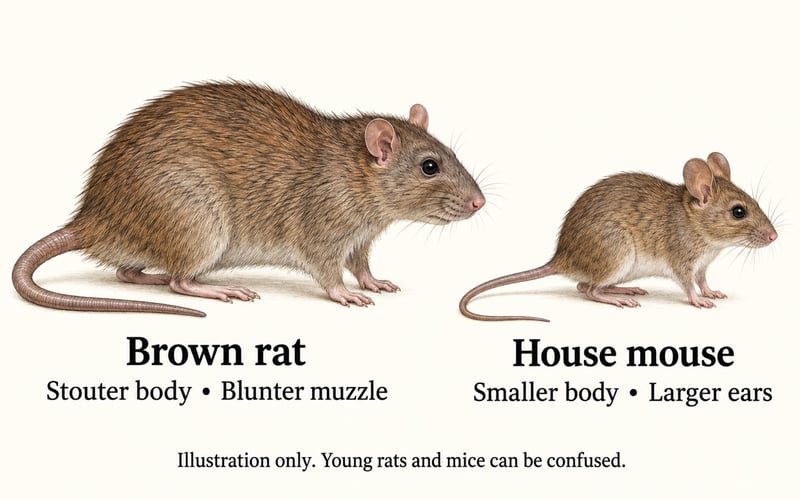
Illustration, not to scale. Young rats and mice can be confused; ask for help if identification is uncertain.
Look for several signs together. Photograph evidence without touching it and note where it appears. The BPCA rat advice helps distinguish rats from other animals.
- Droppings: dark pellets may indicate rodents, but small pellets can be mouse droppings. Do not handle them to judge freshness.
- Runs: flattened patches along walls and base edges where rats walk repeatedly. Often greasy where fur contacts the surface.
- Gnaw marks: inspect damaged seed containers, timber, plastic and cables. These are clues, not proof of a particular species.
- Nests: shredded insulation, newspaper, or bubble wrap gathered behind pots, compost bags, or under staging.
- Chewed wiring: keep clear and stop using affected electrical equipment. Have the circuit made safe and checked by a qualified electrician.
Video: rat-proofing inspection walkthrough
Rat-proofing the base: exclusion at install
Durable mesh or other proofing materials may help close a confirmed route. The mesh strength, openings, fixings and surrounding structure all matter. Ask a pest professional to specify the detail; an arbitrary shallow strip is not guaranteed to stop burrowing.
Do not lift or jack up an assembled glazed greenhouse to slide mesh underneath. The frame can distort and glass can break. Arrange any base alteration with a competent installer, following the manufacturer instructions. Our concrete base guide covers preparation for an appropriate base.
Door seals: repair draughts without promising rat-proofing
Check the door closes properly and inspect damaged seals. A rubber or brush strip helps with draughts, but rats can damage flexible materials. Structural gaps need suitable proofing rather than a promise that a replacement seal will stop an infestation.
The Elite Draught Excluder costs £26. Check the fit with your exact Elite door before ordering. It is a draught-control part, not a tested rodent barrier.
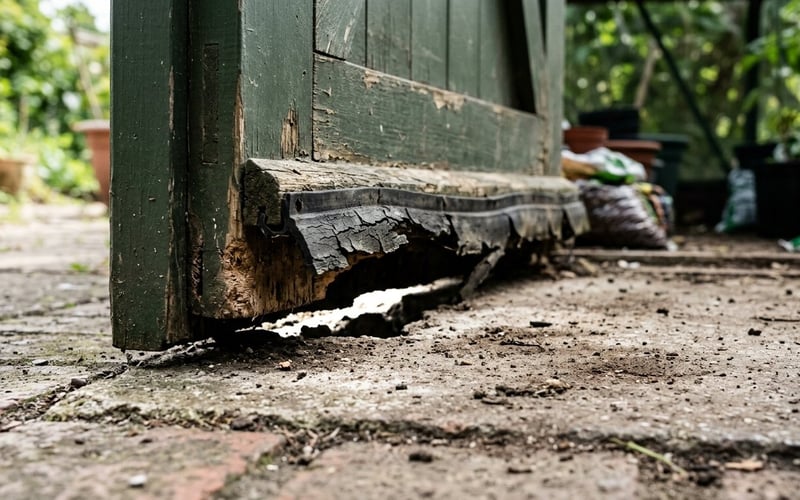
Check the actual door and frame. This illustrative close-up is not a product identification or proof of rat access.
Sealing the frame and glazing
Inspect damaged glazing seals and openings around services without climbing onto the greenhouse. Replace parts with the correct manufacturer-compatible sections. Leave high-level or structural repairs to someone competent.
Wooden greenhouses have different weaknesses: check corner joints for rot, any missing putty around old glazing, and gaps where timber has shrunk seasonally.
Humane control methods
Removing food and shelter supports control, but an established infestation may need professional treatment. The method must protect children, pets and wildlife as well as deal with the rats.
- Live-capture traps: do not treat catch-and-release as an easy humane solution. Captured animals need lawful, humane handling. Ask a professional rather than driving a trapped rat elsewhere.
- Traps: if used, choose a purpose-made rat trap and follow its instructions. Keep it in a suitable protective enclosure away from children, pets and wildlife. Check frequently. Do not use improvised or glue traps.
- Scent deterrents: do not rely on peppermint, spices or ultrasonic devices to resolve an infestation. Address food sources and entry routes.
- Predators: pets and wild predators are not a dependable control plan. Keep pets away from traps and bait.
Expert Tip: start with the attraction
Check stored bird food, seed packets, compost spills and fallen produce. Removing an easy meal is worthwhile even while you arrange professional help. If rodenticide is needed, it must suit the site and its label. A locked box alone does not remove risks to pets or wildlife.
A replacement seal for draught control
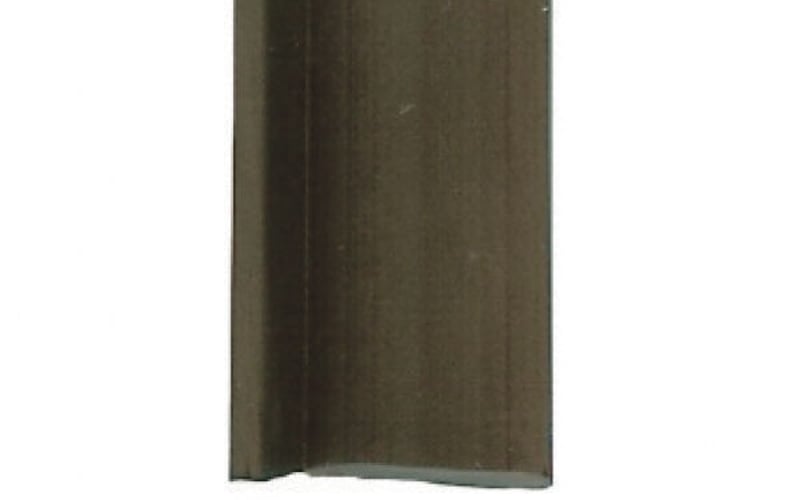
View the Elite Draught Excluder
The actual draught-control part. Check compatibility before ordering; this is not a rodent-proof barrier.
| Part | What it does |
|---|---|
| Elite Draught Excluder | Helps reduce draughts around a compatible greenhouse door. Not a rat-proofing guarantee. |
| Before ordering | Confirm the profile and length required for your door. |
| Price | £26 |
| Product | View the Elite Draught Excluder |
Rat-proofing garden sheds
Sheds suffer the same entry points as greenhouses but with one extra problem: timber floors sitting directly on soil. Rats burrow from below, chew through cladding, and nest in stored tools and compost. Prevention is the same principle: exclude from below and seal all gaps.
Inspect shed floors and cladding for damage. Do not raise an occupied or loaded shed on improvised blocks. Arrange structural repairs safely. Flexible filler alone is not reliable rodent proofing; use materials suited to the confirmed entry point.
When to call a pest control professional
Contact your council pest-control service or a suitable pest professional when you cannot identify or safely resolve the problem. Seek help promptly if:
- Activity continues despite removing food sources and addressing obvious access problems
- You find nests or repeated fresh signs in several locations
- Contamination is extensive or difficult to clean safely
- Wiring or the structure is damaged
- Children, pets or wildlife make safe treatment difficult
Ask for an inspection, a treatment plan and advice on preventing recurrence. Costs depend on the site and extent of the problem. A daytime sighting alone does not establish the size of an infestation.
Frequently asked questions
How do rats get into greenhouses?
Rats can use gaps around bases, doors and other openings. They can also climb and burrow. Check the actual route rather than assuming a worn seal is the only cause.
How do I stop rats getting under my greenhouse base?
Have the entry route assessed and use suitable durable proofing. Do not jack up a glazed greenhouse for a DIY retrofit. Coordinate any base work with safe structural support and pest control.
Do rats chew through greenhouse bubble wrap insulation?
Yes, rodents may damage insulation or use it for nesting. Check sheltered areas carefully. Shredded material alone does not identify the species.
What does rat damage look like in a greenhouse?
Look for droppings, gnawing, disturbed soil and repeated runs. Small droppings do not confirm rats. Avoid touching contaminated material and seek help if identification is uncertain.
Are rat poisons safe to use in a greenhouse?
Rodenticides carry risks and must be used only as their label permits. Ask a qualified pest professional about treatment where needed. Do not scatter bait or assume placing it outside makes it safe.
Can rats damage a greenhouse structure?
Rats can damage timber, flexible seals and electrical insulation. Have wiring made safe by an electrician. Repair structural damage using the correct parts and methods.
How much does rat-proofing a greenhouse cost?
Cost depends on the entry route, damage and treatment needed. Get a quote for the actual work. Replacing a draught strip alone is not a complete rat-control job.