August Gardening Jobs: What to Do in the Garden and Greenhouse
August is the busiest harvest month in the UK garden. Pick tomatoes, courgettes, runner beans and soft fruit daily to keep plants cropping. Sow winter salads now for autumn and winter picking: lettuce, spinach, pak choi and rocket. Take semi-ripe cuttings of lavender, rosemary and box. Order your greenhouse heater early, because stock sells out by October every year.
At Greenhouse Stores, we grow through every UK season. August is the month the garden pays you back. This guide covers the jobs that matter now: what to pick, sow, prune and water, plus greenhouse care and early autumn planning.
Key Takeaways
- Harvest daily. Pick tomatoes, courgettes, beans and cucumbers every day to keep plants productive.
- Water deeply, not often. Two or three deep soaks a week beat daily splashing.
- Sow for autumn. Winter lettuce, spinach, rocket and pak choi go in now.
- Prune with care. Summer-prune wisteria, apple and pear; trim lavender after flowering.
- Collect seeds. Save aquilegia, sweet pea and marigold seed on dry days.
- Prep for winter. Order your greenhouse heater now, before the October sell-out.
Expert Tip
If you plan to overwinter tender plants, check their minimum temperatures before buying heating equipment. Running costs depend on the weather, insulation, thermostat setting and energy price.
Quick reference: priority August garden tasks
| Garden area | Critical tasks | Timing |
|---|---|---|
| Vegetables | Harvest tomatoes, beans and courgettes | Daily |
| Flowers | Deadhead perennials, collect seeds | Weekly |
| Fruit | Net berries, harvest stone fruit | As it ripens |
| Lawn | Cut less often, raise the blade height | Weekly |
| Containers | Water daily, feed weekly | Daily / weekly |
| Greenhouse | Ventilate, monitor pests, water | Daily |
Vegetable garden: August harvest and maintenance
Essential harvesting tasks
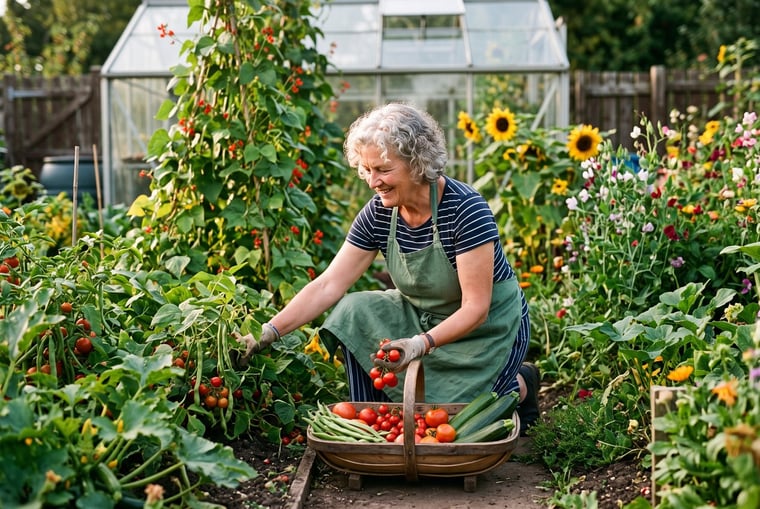
August is harvest season for most vegetables. Regular picking keeps plants productive and stops crops going over or setting seed. A daily walk with a trug is the single best habit this month.
Daily harvest crops:
- Tomatoes: pick when fully coloured but still firm
- Courgettes: harvest at 15-20cm to avoid marrows
- French and runner beans: pick every 2-3 days to keep them cropping
- Cucumbers: cut at 15-25cm for the best flavour
- Peppers and chillies: harvest often for maximum yield
Weekly harvest crops:
- Potatoes: second earlies and maincrops as the foliage dies back
- Onions and shallots: when the foliage yellows and topples
- Beetroot: at tennis-ball size for the best texture
- Carrots: spring-sown roots are now at peak quality
August vegetable tasks, week by week
| Week | Essential tasks | Sowing opportunities |
|---|---|---|
| Week 1 | Harvest early potatoes, start removing tomato leaves | Winter lettuce, rocket, spinach |
| Week 2 | Check for blight, support heavy fruit trusses | Corn salad, land cress |
| Week 3 | Start lifting onions, keep picking beans | Green manure crops |
| Week 4 | Collect herb seed, prepare autumn beds | Japanese onion sets (end of month) |
Watering and feeding strategy
Consistent moisture matters more than volume in August. Irregular watering causes splitting, bolting and blossom end rot. Feed fruiting crops for yield, and ease off roots to keep them sweet.
High-priority watering:
- Tomatoes: deep water 2-3 times a week to prevent blossom end rot
- Sweetcorn: keep moist during tasselling and grain filling
- Brassicas: steady moisture stops them bolting
- Root vegetables: light, regular water stops splitting
Feeding schedule:
- Fruiting crops (tomatoes, peppers): high-potash feed weekly
- Leafy greens: balanced liquid feed every two weeks
- Root crops: stop feeding to prevent forking
Flower garden: peak season management
Deadheading and maintenance
Regular deadheading keeps flowers blooming into autumn and stops unwanted self-seeding. Ten minutes with the secateurs every few days pays off.
- Dahlias: remove spent blooms daily for a steady show
- Roses: cut above the first strong five-leaflet leaf
- Annuals: deadhead petunias, marigolds and busy Lizzies
- Perennials: cut back delphiniums and lupins for a second flush
August pruning tasks
| Plant | Pruning method | Timing |
|---|---|---|
| Wisteria | Cut side shoots to 20cm (five leaves) | Mid-August |
| Lavender | Light trim after flowering, avoid old wood | After flowering |
| Rambling roses | Remove a third of the flowered stems | After flowering |
| Early-flowering shrubs | Light shaping, remove spent blooms | As flowers fade |
Seed collecting guide
August is the best month to save seed from favourite plants. Choose a dry, still day and label everything as you go.
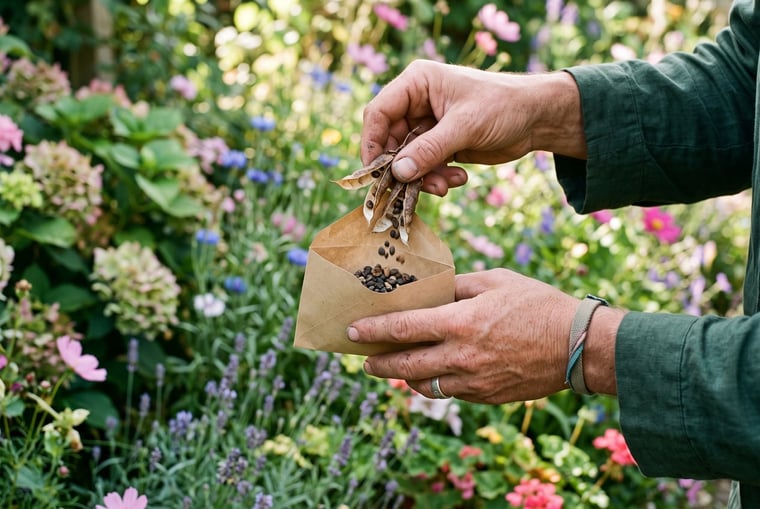
- Aquilegias: collect when the pods turn brown and papery
- Sweet peas: let some pods mature and dry on the plant
- Marigolds: harvest when the flower heads are dry
- Love-in-a-mist: gather the inflated seed pods
- Sunflowers: save when the back of the head turns brown
Storage tips: collect on dry days, store in labelled paper envelopes, keep somewhere cool and dry, and test a few seeds for germination before spring.
Fruit garden: harvest and care
Stone fruit harvest
August brings the peak harvest for many stone fruits. Pick at the right moment and the flavour is far better than shop-bought.
- Plums: a slight give when pressed, and the stalk parts easily
- Peaches and nectarines: fragrant and soft around the stem
- Apricots: full colour with a slight softness
- Cherries: deep colour and a sweet taste test
Soft fruit management
Net soft fruit before it colours to beat the birds. After picking, tidy the canes so next year's crop has room.
- Fit netting before berries colour to stop bird damage
- Use fine mesh to keep out small birds and wasps
- Summer raspberries: cut fruited canes to the ground after picking
- Autumn raspberries: leave the canes and tie in new growth
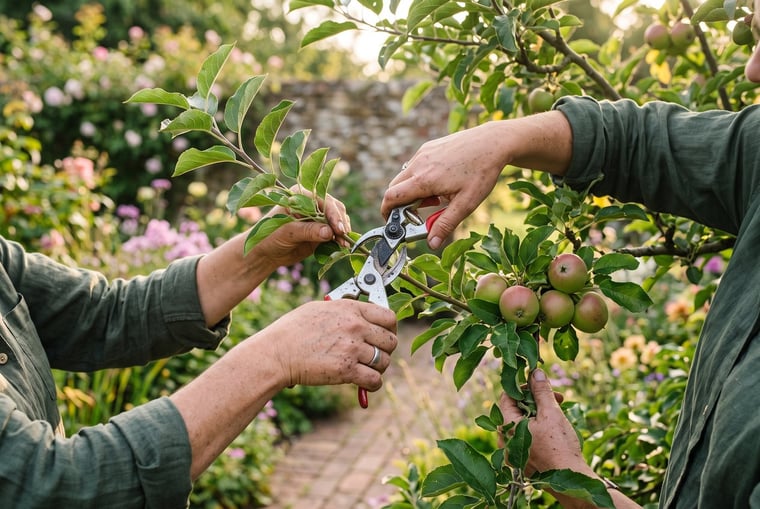
Fruit tree summer pruning
| Tree | Focus | Method |
|---|---|---|
| Apple | Reduce vigour, let light in | Remove water shoots, shorten laterals |
| Pear | Control growth, encourage fruiting | As apple, but more conservative |
| Plum | Keep the shape, avoid over-pruning | Remove crossing branches only |
| Cherry | Minimal work | Remove dead or diseased wood only |
Lawn care in August heat
Mowing adjustments
Grass slows in the heat, so ease off the mower. Raising the blade keeps the sward greener through dry spells.
- Raise the cutting height to 4-5cm to cope with heat stress
- Mow less often as growth slows
- Never take off more than a third of the height in one cut
- Mow in the evening when it is cooler
Watering guidelines
A lawn needs a deep soak, not a daily sprinkle. In a long dry spell, let it go dormant rather than fighting it.
- Water deeply but no more than 2-3 times a week
- Apply about 2.5cm of water per session
- Water early morning to cut evaporation
- Skip high-nitrogen feeds during heat stress
Container and patio plants
Pots work hardest in August and dry out fast. Daily checks and steady feeding keep them flowering into autumn.
- Check pots daily, twice a day in extreme heat
- Water until it runs from the drainage holes
- Group containers to create a humid microclimate
- Give flowering plants a high-potash feed weekly
Greenhouse management
The greenhouse needs daily attention in August. Heat, humidity and pests all build fast under glass. Good ventilation is your main tool.

Climate control
- Open the vents once the temperature passes 25°C (77°F)
- Use shade paint or blinds to stop it overheating
- Damp down the floor on hot mornings to raise humidity
- Fit automatic vent openers for steady control
Greenhouse growing tasks
For a full run-through of winter production, our guide to year-round greenhouse growing covers heating and crop choice in detail.
- Tomatoes: remove lower leaves to the first truss and support heavy trusses
- Cucumbers: train the stems and remove male flowers on female varieties
- Peppers: support the plants and keep watering steady
- Aubergines: limit to 5-6 fruits per plant for good size
New to growing under glass? Our guide to choosing your first greenhouse helps you pick the right size and style.
Pest and disease control
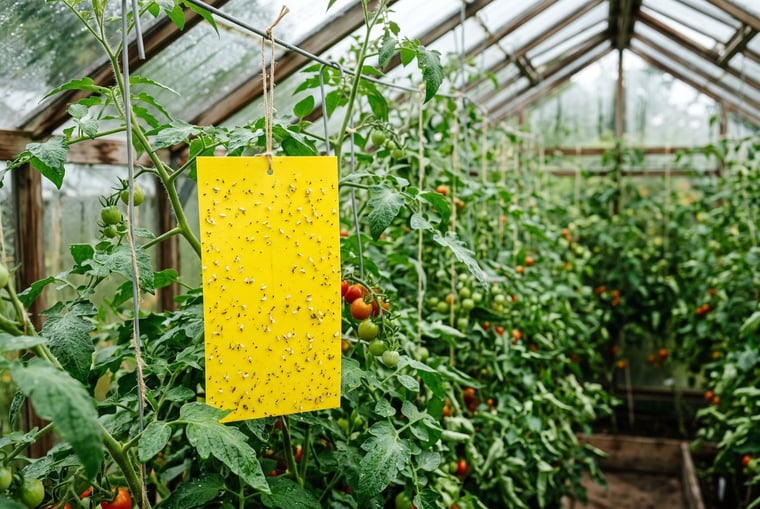
Pests breed fast in the August warmth under glass. Hang yellow sticky traps early to catch whitefly and check the undersides of leaves twice a week.
| Pest | Signs | Control |
|---|---|---|
| Red spider mite | Fine webbing, yellowing leaves | Raise humidity, use biological control |
| Whitefly | White flies, sticky honeydew | Yellow sticky traps, biological control |
| Aphids | Clusters on shoot tips | Soapy water spray, biological control |
| Thrips | Silver streaks on leaves | Blue sticky traps, beneficial insects |
General garden maintenance
Watering wisdom
Water early or late, and aim it at the roots. Mulch holds the moisture in, so you water less often through the dry weeks.
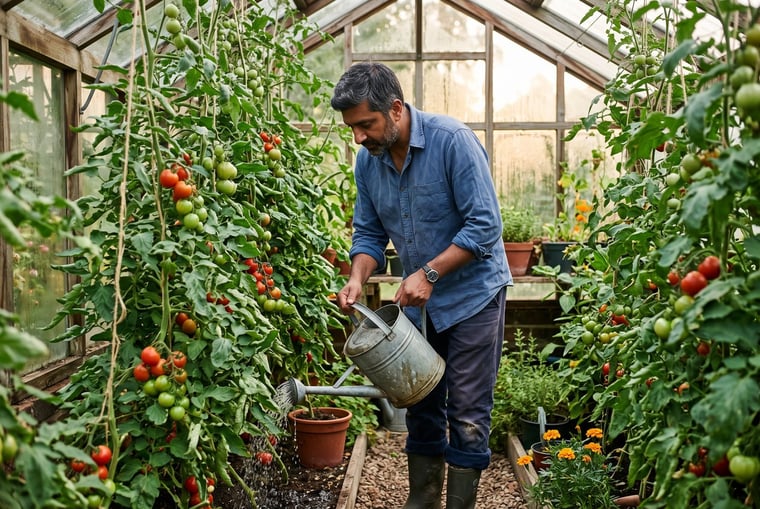
- Water in the early morning or evening to cut evaporation
- Apply water slowly so it soaks in
- Mulch beds with 5-7cm of organic matter
- Direct water to the roots, not the leaves
- Collect rainwater in butts for dry spells
During any hosepipe restriction, follow the Environment Agency guidance for your area.
Pest and disease patrol
August is a peak month for pests. Catch problems early and the damage stays small.
- Blight: watch for brown patches on tomato and potato leaves
- Cabbage white: check brassicas for clusters of white eggs
- Slugs and snails: evening patrols, barriers and beer traps
- Lily beetle: hand-pick the bright red adults and larvae
Identify the pest before choosing a control method, and follow the product instructions.
Planning and preparing for autumn
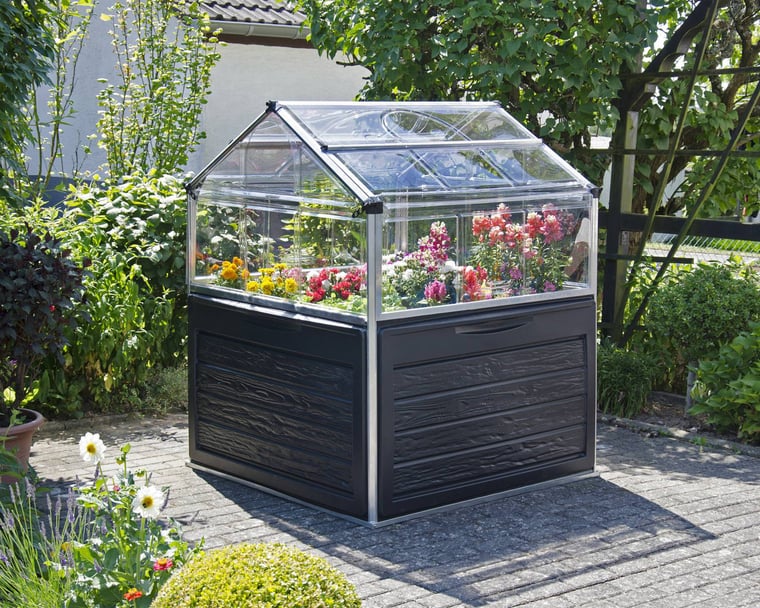
August is the month to set up autumn. Sow winter salads under cover, order spring bulbs, and give tender late sowings a warm, sheltered start.
Autumn planning calendar
| Task | Action | Deadline |
|---|---|---|
| Spring bulb orders | Choose varieties and quantities | Mid-August |
| Autumn sowing | Prepare seedbeds, order seed | End of August |
| Tool maintenance | Clean, sharpen and oil tools | Through the month |
| Next year's veg | Plan the crop rotation | Late August |
August is also a good time for family gardening, with children off school and plenty to harvest. Seed collecting and picking are easy jobs to share.
Regional notes
Northern gardens (Scotland, northern England): harvests run 1-2 weeks later, so use cloches and fleece and pick cold-hardy varieties for autumn sowing.
Southern gardens (south-west, south coast): water more in heatwaves, shade tender plants, and make the most of the longer season.
Urban gardens: the heat-island effect raises watering needs, and balcony plots need wind protection.
Weekly August garden calendar
Week 1 (1-7 August)
Begin the daily tomato and courgette harvest. Check and repair irrigation. Mulch to hold moisture. Sow winter lettuce and rocket.
Week 2 (8-14 August)
Summer-prune apple and pear trees. Lift early potatoes. Deadhead perennials. Take softwood cuttings of herbs.
Week 3 (15-21 August)
Collect seed from early flowers. Lift onions and shallots. Prune wisteria and rambling roses. Plan autumn schemes.
Week 4 (22-31 August)
Harvest stone fruit as it ripens. Start autumn lawn prep. Harden off late sowings. Prepare beds for planting.
Troubleshooting common August problems
Wilting despite watering: check for root problems and poor drainage, then water more deeply and less often.
Blossom end rot on tomatoes: keep watering consistent, mulch well, and check calcium levels.
Sudden aphid outbreak: spray with insecticidal soap and encourage ladybirds and hoverflies.
Yellowing container plants: check drainage and feeding, and look for pot-bound roots.
Matt's Tip: semi-ripe cuttings
Take semi-ripe cuttings of lavender, rosemary, box and sage now. Cut 10-15cm lengths of this year's growth just below a leaf node. Strip the lower leaves, dip in rooting powder, and push into a 50:50 mix of compost and perlite. Keep the pot in your greenhouse and moist. You will have roots in 4-6 weeks and free plants for spring.
Browse our current greenhouse heaters. Check fuel type, ventilation, clearances and output against your greenhouse and plants before choosing.
Growing through the cold months starts with the right kit. Browse our full range of greenhouse heaters to keep tender crops going past the first frost.
Frequently asked questions
What should you do in the garden in August?
August is mainly a harvesting and watering month. Pick tomatoes, courgettes and beans daily, sow winter salads, summer-prune fruit and wisteria, collect seed on dry days, and order a greenhouse heater before the autumn sell-out.
What can I plant in August?
Plant autumn bulbs, spring cabbage and container colour in August. Order daffodil and tulip bulbs to plant later, set out overwintering onion sets and spring cabbage plants, and pot up strawberry runners for next year's crop.
Is it too late to sow vegetables in August?
No, August is ideal for quick autumn crops. Sow rocket, lettuce, spinach, pak choi and radishes for autumn picking. You can also sow green manures in empty beds and plant Japanese onion sets late in the month.
When should I prune lavender?
Trim lavender straight after flowering, usually in August. Cut off the spent flower stalks and the top 2-3cm of leaf to keep the plant compact. Never cut back into old, bare wood, as it rarely regrows.
How often should I water my garden in August?
Water deeply 2-3 times a week, not daily. Container plants need daily attention, while established borders do better with one thorough soak. Always water early morning or evening to cut evaporation.
When should I harvest tomatoes for the best flavour?
Pick tomatoes when fully coloured but still firm. They should come away easily from the vine. Green fruit will ripen indoors on a sunny sill, but vine-ripened tomatoes taste far better.
How do I stop my greenhouse overheating?
Open every vent once it passes 25°C. Use shade paint or blinds, damp down the floor on hot mornings, and keep the door open in a heatwave. Automatic vent openers give steady control without daily fuss.
Should I feed my lawn in August?
Avoid high-nitrogen feeds in August. They push soft growth that struggles in autumn weather. Instead, focus on the right mowing height of 4-5cm and a deep soak if needed, then feed in early autumn.
How do I know if my plants have blight?
Look for brown or black patches on the leaves. On tomatoes you will also see dark patches on the fruit, sometimes with white fuzz underneath. Remove affected plants at once and bin them, never compost them.
Related articles
- What to Grow in a Greenhouse: Beginner's Guide
- Companion Planting in a Greenhouse
- How to Set Up a New Greenhouse: First-Time Owner's Checklist
- Greenhouse Pest Control Guide UK
- Tips for Creating the Perfect Greenhouse for Growing Food
Following on from June and May, August is the pay-off month. Keep the watering steady, stay ahead of pests, and plan for the season ahead. For the colder months, read our winter gardening tips and early spring planning. From all of us at Greenhouse Stores, enjoy the harvest.