Homemade Weed Killers: What Works and What to Avoid
Homemade weed killers can scorch young weeds, while hot water helps tackle small patches on paving. Deep-rooted weeds usually need digging out or follow-up treatment. This guide explains what vinegar, salt and soap actually do, then helps you choose a practical method for beds, paths and greenhouse edges. A few minutes of regular weeding can save a much bigger job later.
Key takeaways
- Lift roots for longer-lasting results. Loosen damp soil before pulling established weeds.
- Choose carefully around planting. Salt stays in soil, while vinegar affects any leaves it touches.
- Match the job to the place. A patio joint needs different treatment from a vegetable bed.
- Make follow-up easy. Pull young weeds before they seed and keep cleared areas under review.
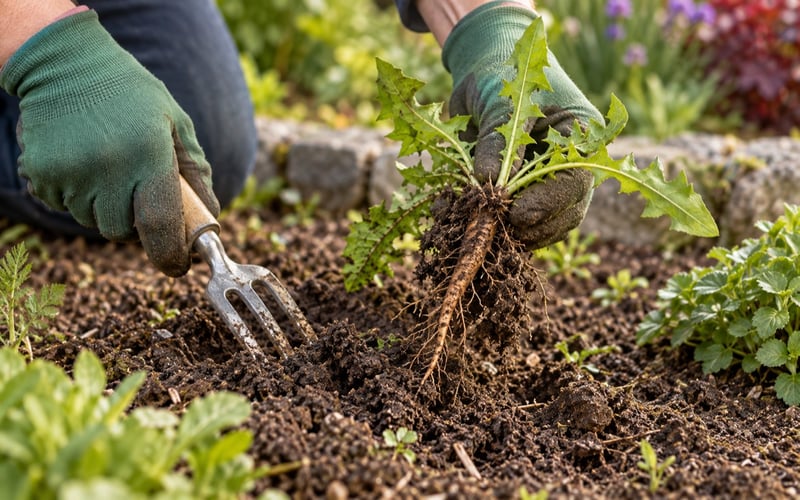
Process illustration: loosen the soil first, then lift the weed and as much root as possible.
Expert tip: look below the leaves
Check what you are dealing with before choosing a treatment. A tiny seedling may lift out easily. A thick taproot or spreading underground stems need more patient removal. Keep checking the spot if part of the root breaks.
Do homemade weed killers actually work?
Some mixtures scorch foliage, but that is not the same as killing the whole weed.
A small annual weed may be easier to control than an established perennial. Dandelions can regrow from root tissue left behind. Other weeds spread through underground stems, which a leaf spray may never reach.
That explains why a patch can look brown after treatment, then turn green again. Lift any regrowth while it is small, and clear weeds before they set seed.
Decide what needs removing first. A few daisies in a lawn may be perfectly acceptable. Weeds competing with seedlings, blocking a path or setting seed through a vegetable bed are a more useful priority.
Should you use vinegar, salt and washing-up liquid?
Vinegar scorches leaves, salt affects water uptake, and soap helps a liquid spread over foliage.
Household vinegar is most likely to affect small, young weeds. It does little to reach a dandelion's long root. Keep it off flowers, vegetables and lawn grass you want to keep.
Salt is a poor fit for beds and borders because it stays behind in the soil. Rain can carry it from paving into nearby planting too.
Washing-up liquid helps a mixture wet the leaves; it does not make it reach deep roots. Adding more soap or stronger vinegar is unlikely to solve a recurring root problem. Concentrated cleaning vinegar also needs much more careful handling than ordinary food vinegar.
For a few weeds among your plants, a hand fork is usually the simpler choice. On paving, clearing the joint removes both the weed and the loose material new seedlings can grow in.
What should you use instead of homemade weed killer?
The most useful starting point depends on where the weeds are growing.
| Where | Start here | Watch out for |
|---|---|---|
| Beds and borders | Lift weeds, then mulch cleared soil | Roots left behind and weeds close to plant stems |
| Paving joints | Scrape out weeds and loose debris | Damaging sound jointing material |
| Gravel paths | Remove weeds and accumulated leaf litter | Seedlings growing in debris above a membrane |
| Lawns | Dig out individual unwanted weeds and repair bare patches | Hot water or non-selective sprays damaging grass |
| Greenhouse edges | Hand weed accessible gaps and tidy around pots | Nearby crop roots, glass and drainage openings |
You do not need to tackle the whole garden at once. Clear the busiest path or your next planting area first. Regular short sessions make it easier to notice new growth while it is still small.
How do you remove weeds from beds and borders?
Hand weeding is easier when soil is damp and workable rather than hard or waterlogged.
Loosen around a weed with a suitable hand tool, keeping clear of neighbouring roots. Lift steadily from the base. For a deep-rooted weed, expose the root rather than snapping off the leaves.
With spreading perennial weeds, remove the underground growth you can reach. Avoid chopping it into lots of pieces. Expect follow-up work where roots run beneath established plants.
Small seedlings in open ground can often be hoed before they establish. Avoid deep, unnecessary cultivation, which brings more buried seeds towards the surface. Our guide to garden soil types helps explain why different soils behave differently.
Remove weeds before they set seed. Keep persistent roots and seeding weeds out of a cool home compost heap. Check your council's garden-waste guidance for suitable disposal.
Does mulch stop weeds coming back?
Mulch helps keep cleared beds tidy by blocking light from reaching new weed seedlings.
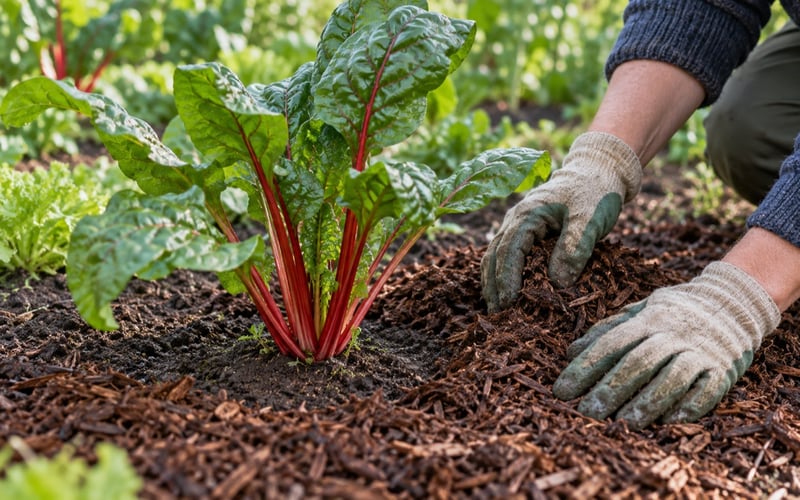
Process illustration: clear weeds before mulching and leave space around plant stems.
Clear established weeds first. Then spread a suitable organic mulch, such as composted bark, evenly over the bare soil. Keep it away from plant stems and crowns. Choose the material and depth to suit your planting.
Pull any seedlings that appear on top while they are small. Top up the mulch as it settles and breaks down.
If you use homemade compost, make sure it is ready for use and free of persistent weed roots. Our beginner's composting guide covers getting started. Leave intended seed-sowing rows clear of a thick mulch so your own seedlings can emerge.
Does boiling water kill weeds on a patio?
Boiling water can damage exposed growth, but established roots may survive.
It works best on small weeds near the surface. Deep-rooted growth may need another treatment or lifting with a hand tool.
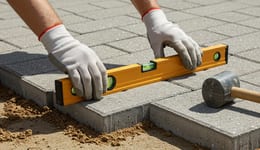
For a few paving weeds, use a suitable hand weeding tool first. Remove loose soil and leaf debris from joints without gouging out sound jointing material. Damaged joints may need repair after cleaning.
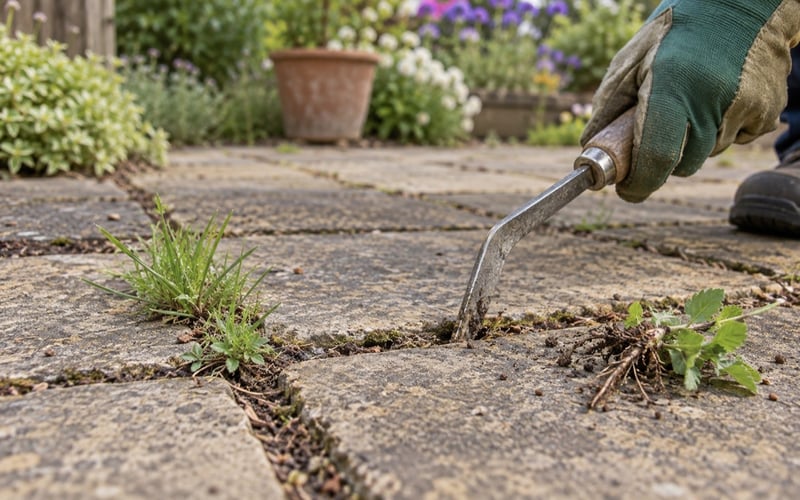
Process illustration: remove the weed and accumulated debris, without damaging sound paving joints.
Pour carefully onto the weed, keeping children and pets away until the area has cooled. Keep hot water clear of nearby planting and greenhouse glass. Use plain water rather than salted cooking water.
How can you reduce weeds around a greenhouse?
A clear, accessible growing area makes weeds easier to spot and remove.
Check beneath benches, around pots and along the inside edges. Pull small weeds before their roots become tangled with crops. Avoid levering tools against the greenhouse frame or glass.
Sweep up spilled compost and fallen leaves on paths. Keep drainage openings clear. These small jobs fit naturally into a greenhouse cleaning routine, without adding another spray around your plants.
A membrane can help beneath a properly laid path. Sweep away debris above it, where new weeds can take hold. Plan the floor around drainage and how you grow. Our greenhouse flooring guide explains the main choices.
Would a raised bed help?
A raised bed gives you a clearly defined patch that is easy to reach and maintain.
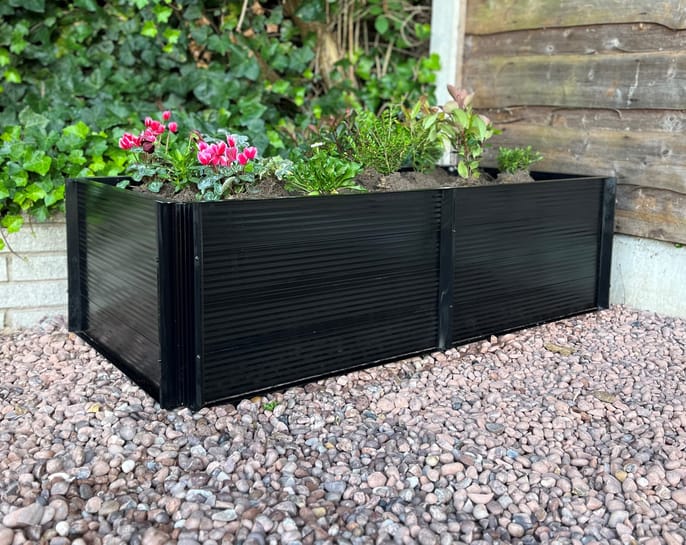
This aluminium bed provides a neat edge for a small growing area. Clear the ground before filling it with suitable growing material.
Keep an eye out for new seedlings as you water and harvest. The same little-and-often approach works in an ordinary border.
If you are planning wider changes, our greenhouse accessories range includes equipment for organising your growing space.
Frequently asked questions
Does vinegar, salt and washing-up liquid kill weeds?
The mixture can scorch leaves, especially on young weeds. Deep roots often regrow. Keep salt out of growing beds and avoid splashing plants you want to keep.
What kills weeds permanently?
No treatment keeps a garden permanently free of new weeds. Removing persistent roots and preventing seed spread helps, but new seedlings still need attention.
Does boiling water kill weed roots?
It can affect shallow roots; deeper roots often survive. For persistent paving weeds, loosen the joint and lift out the root.
Can I use baking soda or Epsom salts as weed killer?
Neither is a dependable weed-control method for garden beds. Avoid adding unwanted salts to soil and remove the weeds instead.
Are homemade weed killers safe for pets?
Hand weeding is a straightforward choice around pets. Plain hot water leaves no added residue once the area has cooled. Keep pets away while pouring, and store vinegar or other ingredients out of reach.