Greenhouse Gardening Tips for Beginners: What to Grow
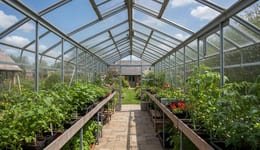
Greenhouse gardening is easiest when you start with a few reliable crops. Lettuce, radishes and many herbs suit cooler conditions. Tomatoes, cucumbers and chillies need more warmth, so add them later. Give each plant enough room, check the compost before watering and open the vents on warm days. You do not need to fill every shelf in your first season.
Key takeaways
- Begin with three or four crops. This keeps watering and plant care manageable.
- Use small, repeated sowings. A few lettuces or radishes at a time prevent waste.
- Keep tender plants warm. Tomatoes, cucumbers and chillies dislike cold spring nights.
- Check compost before watering. Water when it starts to dry rather than following a fixed timetable.
- Ventilate on warm days. Open vents and the door before the greenhouse becomes hot and stuffy.
What should beginners grow in a greenhouse?
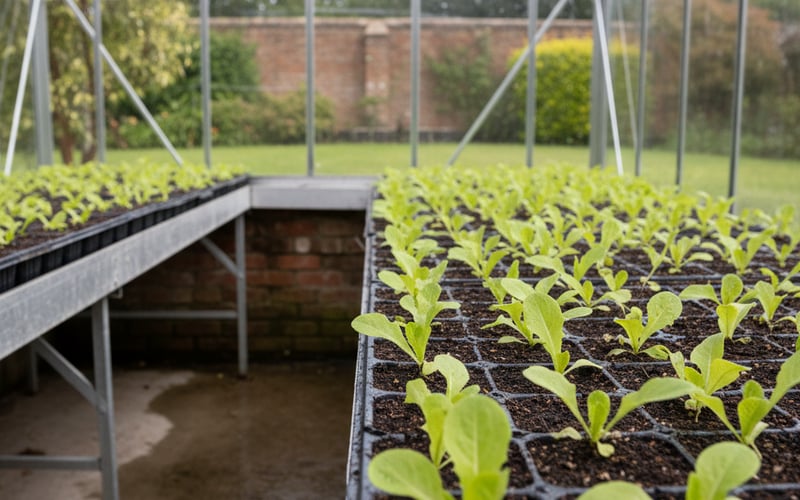
Start with crops that give clear signs when they need water, space or support. Lettuce, radishes and herbs are forgiving choices. They also fit around larger summer plants.
Tomatoes and cucumbers are rewarding once the weather warms. Both need more room and regular attention. Chillies grow well in pots and are easier to move if nights turn cold.
| Crop | When to start | Where to grow it | Why it suits beginners |
|---|---|---|---|
| Lettuce | From late winter onwards, depending on the variety | Trays, pots or a border | Small sowings give regular leaves |
| Radishes | From early spring | Containers or a shallow border | They use little space and grow quickly |
| Parsley and chives | From spring | Pots or staging | They stay compact and are easy to pick |
| Tomatoes | Sow with warmth in spring | Large pots, grow bags or a border | Plants clearly show when they need support |
| Cucumbers | Sow with warmth in spring | Large pots or a border with support | One or two plants can fill a small space |
| Chillies | Start indoors with warmth in early spring | Pots in the sunniest area | Pots are easy to move and manage |
| Strawberries | Plant in spring or autumn | Pots, troughs or raised containers | Containers keep the fruit within easy reach |
Use the instructions on each seed packet for sowing depth and spacing. Local weather varies, even within the same county. The calendar is a guide rather than a deadline.
How do you start greenhouse gardening?
Plan the space before buying plants. Keep a clear route from the door to the back. Put taller crops where they will not shade smaller seedlings.
Choose three or four crops for your first season. Sow small batches and label every tray. The label should show the crop, variety and sowing date.
Use clean pots and fresh, peat-free seed compost for sowing. Many tender seeds need indoor warmth to germinate. An unheated greenhouse may still be too cold at night.
Our guide to starting seeds in a greenhouse explains trays, compost and moving seedlings. If you are still choosing a structure, read our greenhouse buyers guide before measuring the space.
Do beginners need a large greenhouse?
A larger greenhouse gives plants more room, but only if it fits the garden comfortably. Leave enough space around it for cleaning and maintenance.
An 8x6 greenhouse is a useful starting size for many gardens. It can hold staging on one side and taller crops on the other. A smaller model can still work well if you keep the crop list short.
Our main Greenhouse Stores range groups current models by size, type and brand. The small greenhouses range is helpful when an 8x6 footprint will not fit.
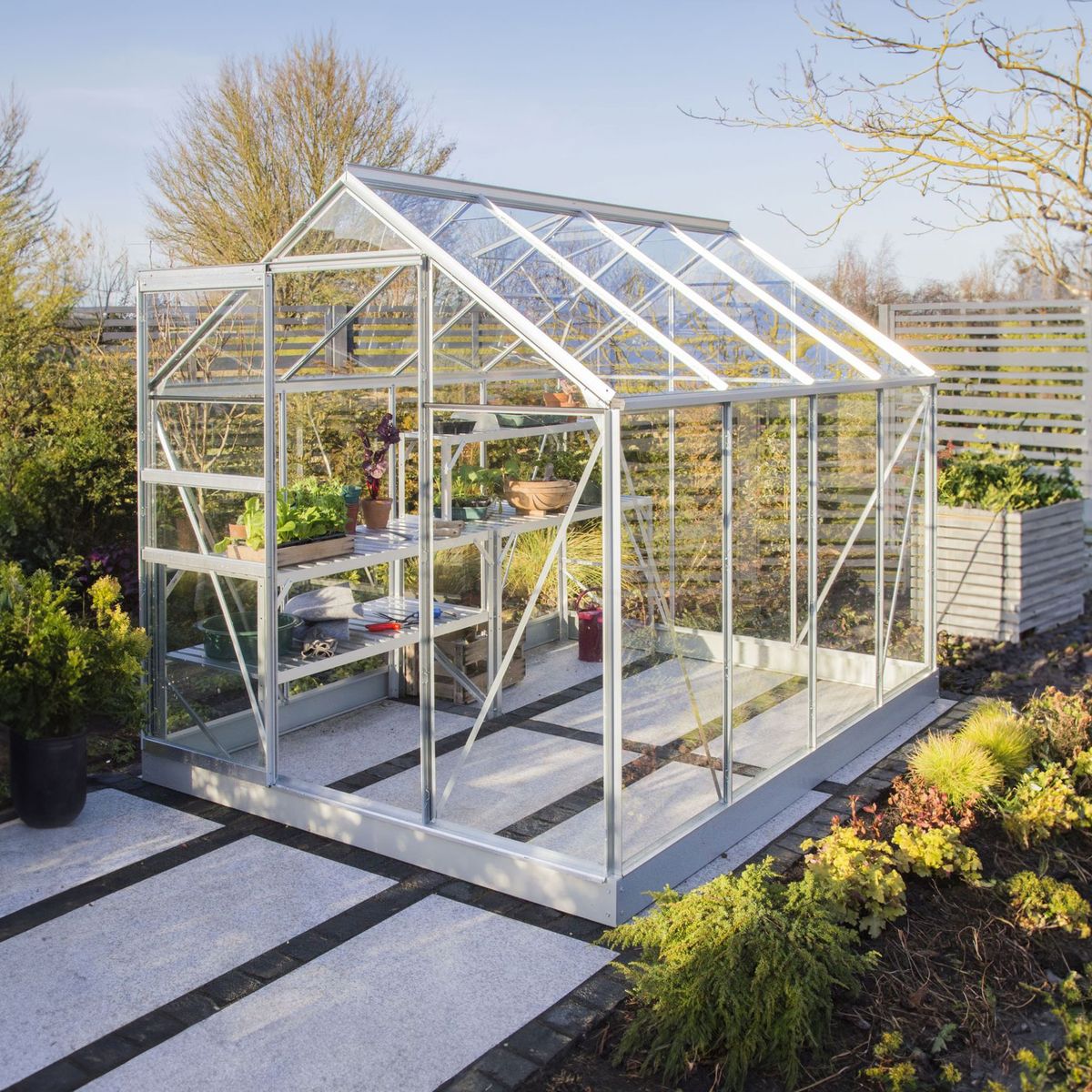
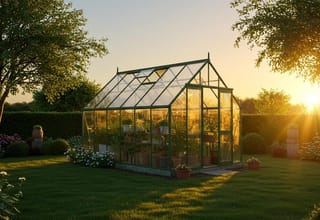
The Vitavia Venus shown above is 1930mm wide. It has toughened glass, a sliding door, one roof vent and built-in gutters. Those features cover the main needs of a first growing season without making the setup complicated.
What can you grow in an unheated greenhouse?
An unheated greenhouse suits hardy salads, herbs and young plants during much of the year. It also shelters summer crops once cold nights have passed.
Start with lettuce, radishes, parsley and chives. Add tomatoes, cucumbers and chillies when conditions are mild enough. A cold greenhouse can still freeze, so do not treat it as a frost-free room.
Keep a maximum-minimum thermometer where it is easy to read. Use fleece for brief cold spells and move tender seedlings indoors when necessary. Our month-by-month unheated greenhouse guide provides a fuller seasonal plan.
How should beginners water greenhouse plants?
Check the compost before watering. Push a finger just below the surface or lift smaller pots to judge their weight. Water when the compost starts to dry.
Water the compost rather than soaking the leaves. Morning is usually convenient because you can see what each plant needs. It also gives splashed foliage time to dry.
Pots and grow bags dry faster than greenhouse borders. Hot, bright weather also increases water use. This is why a fixed daily schedule can give plants too much water in cool weather.
Our greenhouse watering guide compares hand watering, drip systems and capillary matting.
How do you keep a beginner greenhouse organised?
Give every item a regular place. Keep heavy bags and watering cans low. Put seed trays where they receive light without blocking the path.
Staging creates a comfortable working surface and keeps small pots together. Leave some floor space for tomatoes, cucumbers and other tall crops.
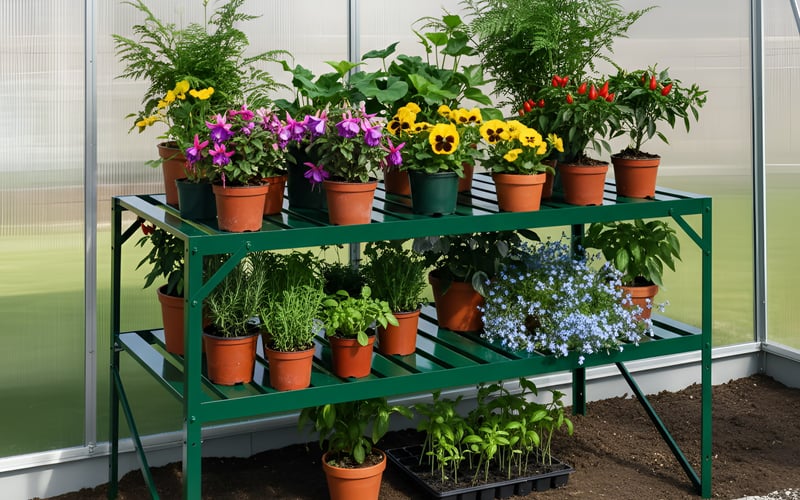
View and buy the Vitavia 2 Tier Green Staging
Current price: £109
This staging is 1200mm wide and has two slatted shelves. The powder-coated aluminium frame suits a damp greenhouse and is easy to wipe clean. Browse our greenhouse staging if you need a different width or finish.
How do you ventilate a greenhouse?
Open roof vents and the door on warm, sunny days. Fresh air helps control heat and reduces the still, damp conditions that encourage mould.
Close the greenhouse later when the temperature begins to fall. During changeable weather, check it more than once. Automatic vent openers can help when you are away, but the door still needs attention on very hot days.
Keep leaves away from the glass and avoid packing trays tightly together. The greenhouse accessories range includes thermometers, vent openers and other practical additions.
What should you grow after the easy crops?
Add one new crop at a time. This lets you learn its watering, feeding and support needs without making the greenhouse feel like work.
Tomatoes are a sensible next step. They need support and regular watering, but the routine is easy to understand. Read our greenhouse tomato growing guide before planting them out.
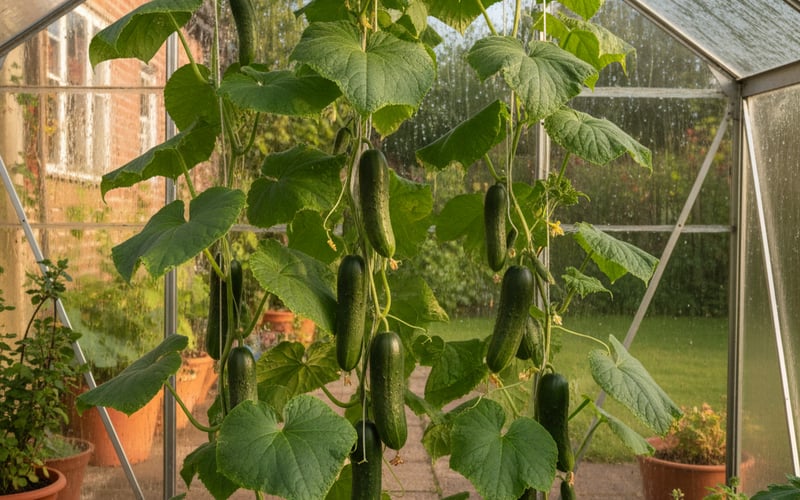
Cucumbers need warmth, moisture and a support. One plant can take up more room than expected. Our greenhouse cucumber guide explains how to train and water them.
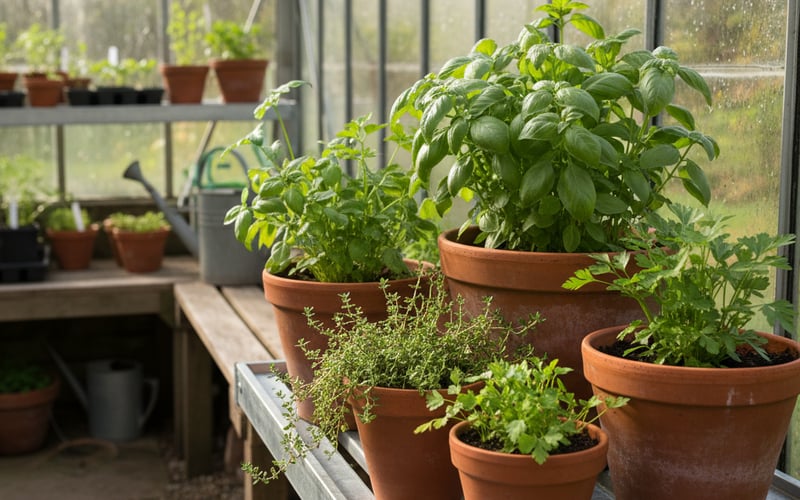
Herbs are useful for filling smaller spaces. Parsley, chives and mint have different needs from basil, so group them by watering and warmth. See our year-round greenhouse herb guide for an easy seasonal plan.
Your first greenhouse routine
- Look for dry compost, wilted leaves or damaged seedlings.
- Open the vents and door when the greenhouse warms.
- Water the plants that need it, aiming at the compost.
- Tie in tomatoes and cucumbers before stems start leaning.
- Remove fallen leaves and empty pots from the floor.
- Write down what you sowed, planted and harvested.
A few minutes of regular care is easier than a long weekly rescue job. Keep the first season simple and make notes. Next year, you will know which crops earned their space.
Frequently asked questions
What is the easiest thing to grow in a greenhouse?
Lettuce is one of the easiest greenhouse crops for beginners. Sow a small batch, keep the compost moist and harvest leaves as needed.
Can vegetables grow in an unheated greenhouse?
Yes, many vegetables grow well in an unheated greenhouse. Match the crop and sowing time to the temperature, light and local weather.
When should beginners start planting in a greenhouse?
Hardy crops can start under cover from late winter or early spring. Tender plants should wait until nights are reliably mild.
How often should greenhouse plants be watered?
Water when the compost starts to dry. Pots need checking more often during hot, bright weather than during cool or cloudy spells.
Does a beginner need a greenhouse heater?
Most beginners can grow useful crops without heating the whole greenhouse. Indoor warmth or a heated propagator can help tender seeds germinate.